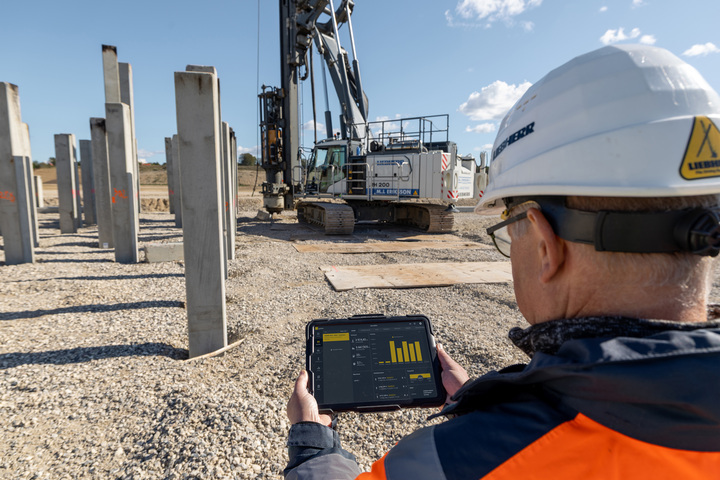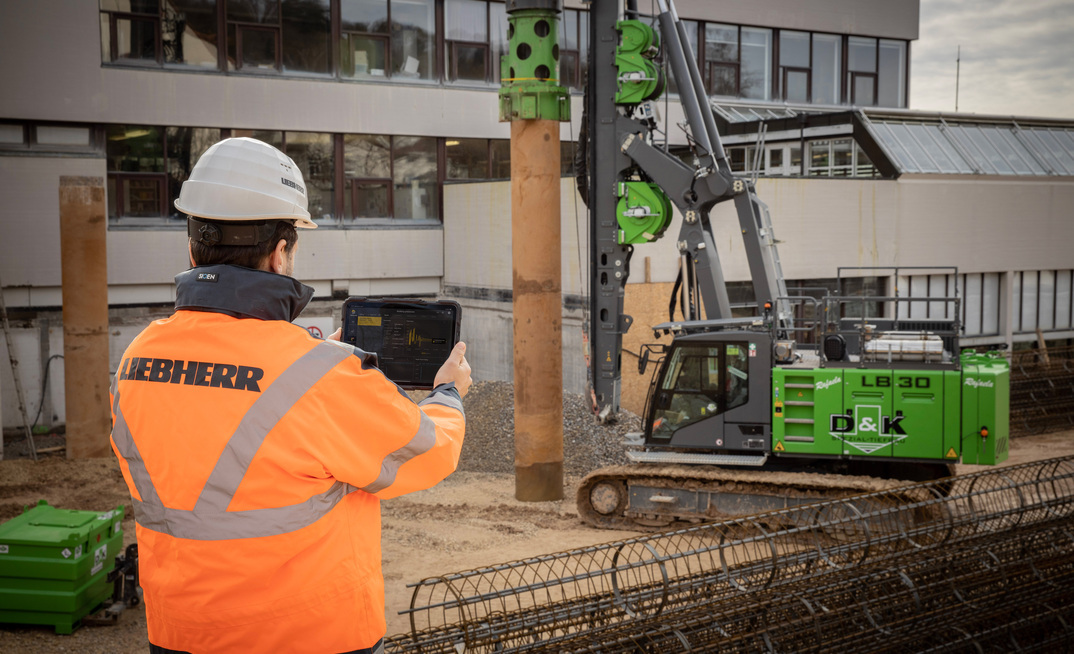


For many years, digitalisation in the deep foundation sector centred on the drilling rig itself. Contractors invested in systems that could record drilling parameters, guide operators and improve quality on site. Those developments remain important, but the industry's digital focus is steadily expanding beyond the machine.
Today, contractors are increasingly looking to connect every stage of a project, from selecting the right equipment before mobilisation, through positioning and execution on site, to documenting completed work for clients. The objective is not just to collect more data, but to make better use of it.
Liebherr's latest portfolio of digital tools is indicative of the change. Rather than functioning as standalone software packages, the company's Foundation Equipment Planner, LIPOS positioning system and MyJobsite platform are designed to support different stages of a foundation project, creating what is becoming an increasingly connected digital workflow.
"Basically, the first step of in our data recording portfolio started over 25 years ago," says Sebastian Vallaster, Liebherr's product manager for data acquisition and positioning systems. "We started providing information for the operator, how the process works and what's happening in the ground. That was, I think, the starting point, and then we developed it until where we are now."
YOU MIGHT ALSO LIKE
Before the job
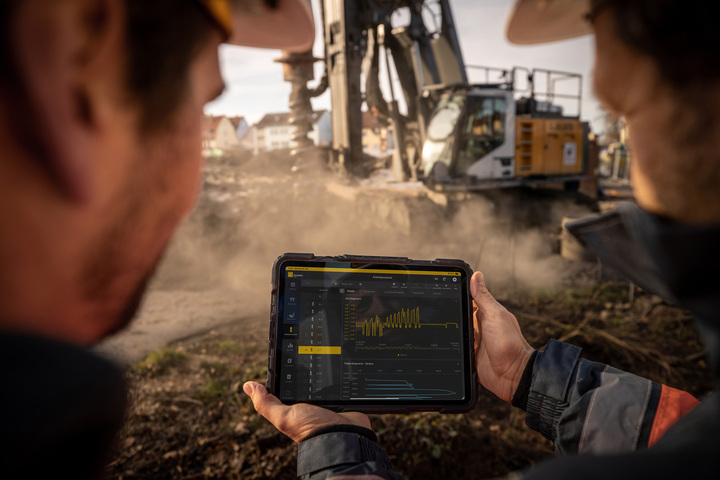
The newest piece of that workflow actually begins long before a piling rig arrives on site, as contractors need reliable machine-specific information during the earliest stages of project preparation, explains Daniel Panek, product manager for planning solutions.
"When you only start thinking about the stability of a machine, how to prepare the jobsite and which machine is actually the right fit for what I want to do? You have to start thinking about this weeks and months before the job actually starts."
The Foundation Equipment Planner introduced this year, addresses that planning phase. Available as a web application, it enables engineers and planners to calculate load capacities and ground pressures for Liebherr deep foundation machines across different working positions and tool configurations before mobilisation.
It allows users to define the exact working position of the machine. Radius, uppercarriage rotation, carriage position and winch forces can be set by the user exactly as on the machine. In addition, the ground breakage limit of the planned jobsite can be stored to ensure that the calculated ground pressures do not exceed it.
The planner also calculates the load capacity of the winches and the resulting ground pressures, including contact area of the track pads, machine centre of gravity and risk of tipping. The calculation is available according to DIN EN 16228 and FPS standard as well as in metric and imperial units.
The user can then generate PDF reports summarising calculations which helps to communicate the requisite information to stakeholders.
Within the application, users can simulate different machine configurations and operating methods, allowing them to assess how a selected rig will perform on a particular project.
The planner also calculates the load capacity of the winches
According to Panek, the software is intended to support engineering decisions rather than replace them. "We want to provide them very accurate data from the machine perspective long before the machine actually arrives on site.
Instead of waiting for machine-specific calculations from the manufacturer, planners can obtain information themselves during the design phase, helping to prepare working platforms and assess whether anticipated ground conditions are suitable for the selected equipment.
The Foundation Equipment Planner currently supports eight LB machines with more than 240 configurations across the operating modes Kelly Drilling, Full Displacement Drilling (FDD), Continuous Flight Auger (CFA) Drilling, and Double Rotary Drilling (CCFA). Additional machines, including the LRB series, as well as further operating modes, will be added in future releases.
During the job
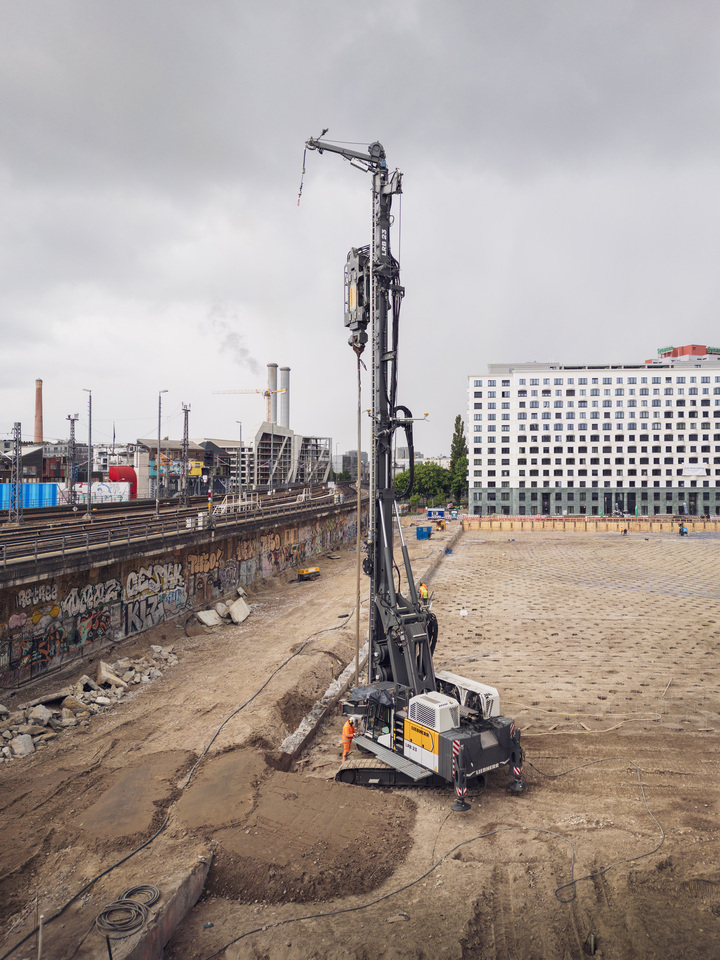
Once the rig reaches site, attention shifts from planning to execution. This is where Liebherr's LIPOS positioning system and its long-established Process Data Recording (PDE) system come into play.
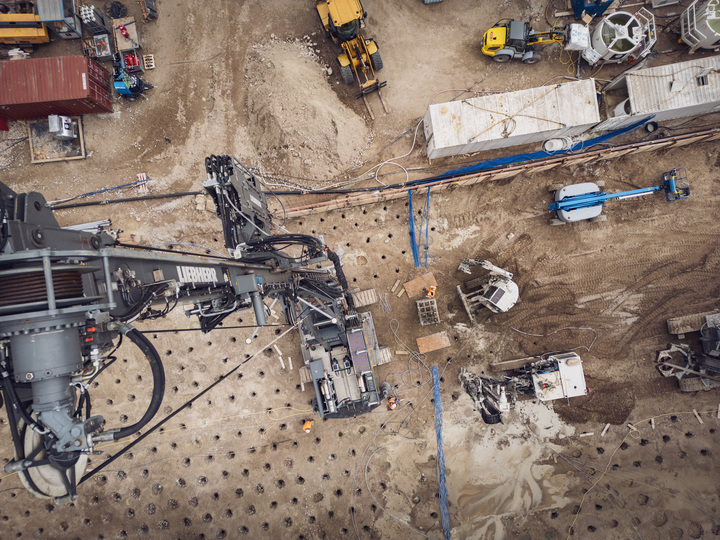
Before drilling begins, project information, including pile plans and pile lists, is uploaded directly to the machine.
"The machine knows which pile has to be drilled at which position and also any additional information to the pile," Vallaster explains. "The operator can move to the right spot, to the right place of the pile and sees the deviation to the planned position."
Using GNSS positioning, operators receive guidance until the machine reaches the specified tolerance. Drilling can then begin and the system automatically links all recorded process parameters to the correct pile.
This will only become more important in the years ahead
During construction, the operator can monitor drilling pressure, crowd force, crowd speed, concrete pressure and other operating parameters in real time. The displayed information varies according to the drilling method, whether Kelly drilling, double rotary drilling or another application.
For full displacement drilling, the system compares the calculated specific energy for soil displacement with predefined reference values, helping the operator determine when the required displacement has been achieved before concreting begins.
"The machine knows which pile has to be drilled at which position
"The operator sees the calculated pile radius and sees how fast he has to go out with the machine, how fast he has to lift the drilling rig to get the ideal pile radius or exactly the amount of concrete inside the pile," Vallaster says.
According to Vallaster, PDE is now installed on between 80 and 90 per cent of Liebherr drilling rigs that leave the factory as new machines, while LIPOS has been adopted by around 50 customers worldwide.
After the job
The final stage of the workflow begins once drilling data leaves the machine. Information collected through PDE, LIPOS and other onboard systems is transferred through Liebherr Connect into MyJobsite, a cloud-based platform introduced in 2021.
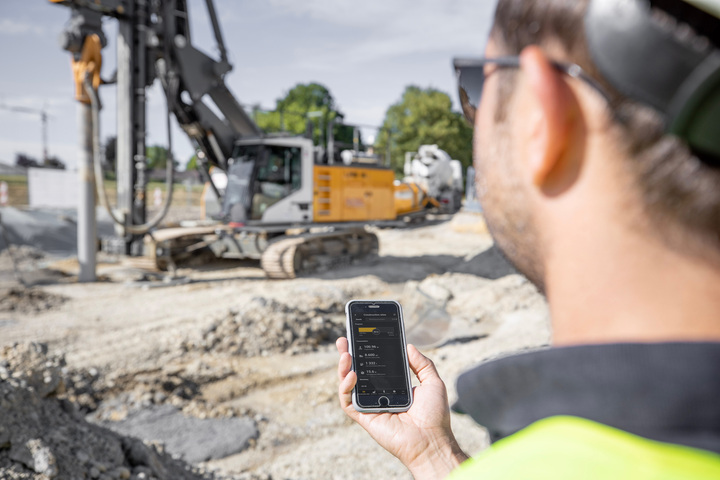
Matthias Boric, product manager for MyJobsite, describes the platform as covering both the active construction phase and the analysis that follows.
Planning information can be imported before work begins, while live machine and process data are added automatically during construction. Contractors can then monitor project progress through dashboards, generate reports for individual piles or entire projects and distribute documentation automatically to clients and stakeholders.
"Everything is displayed visually in our web interface, giving customers and users a clear transparency on the current process and operational status," says Boric.
One of the biggest advantages, he believes, is reducing the administrative effort associated with project reporting.
"Once you've configured all the settings, the data flow is fully automated — from data collection all the way to the finished report on the customer's end, where the customer can even choose to have the report sent automatically via email."
The platform supports standardised reporting, project dashboards and construction diaries, while also allowing data to be exported for further quality or performance analysis.
We can simplify processes
Taken together, the three systems illustrate how digitalisation within the deep foundation sector is changing. Instead of focusing solely on machine performance, contractors want continuity across the entire project lifecycle: planning the right equipment before mobilisation, guiding operators during construction and automatically documenting completed work afterwards.
Panek expects that trend to continue. "As projects become more complex, our focus is on helping customers work more efficiently across the entire project lifecycle. By connecting our machines with digital solutions, we can simplify processes, improve quality and provide greater insight into project execution.
"We believe this will only become more important in the years ahead, and we will continue to develop solutions that support our customers in meeting the challenges of future projects," he says.