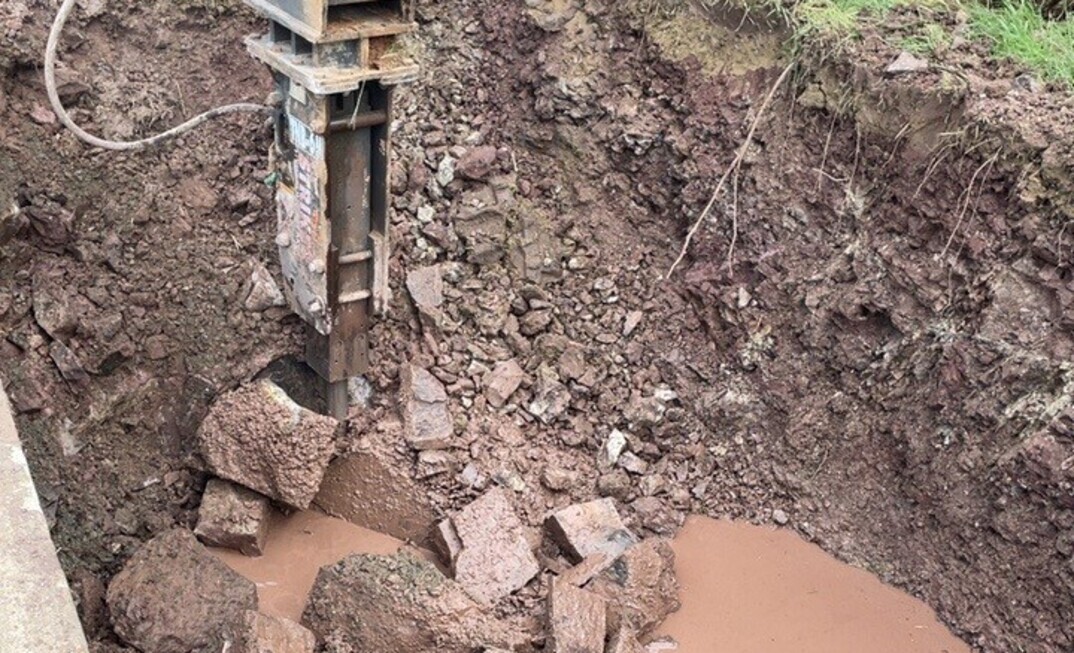


When continuous granite threatened to derail a major fibre installation, Team Fishel and Ditch Witch proved that the right partnership can be just as important as the right equipment.
The digital world doesn't begin inside a server rack. It begins underground. Hidden beneath fields, roads and neighborhoods lies a network of fibre optic cable carrying conversations, healthcare, education and countless moments of everyday life. Before a data center can power the future, that unseen infrastructure must first find its way to the front door.
For Team Fishel, that meant installing the final 14 miles of fibre optic cable connecting a major data center in Frederick County, Maryland, USA. It was the final link needed to bring one of the region's newest technology hubs online.
On paper, the assignment looked manageable. In the field, it was anything but.
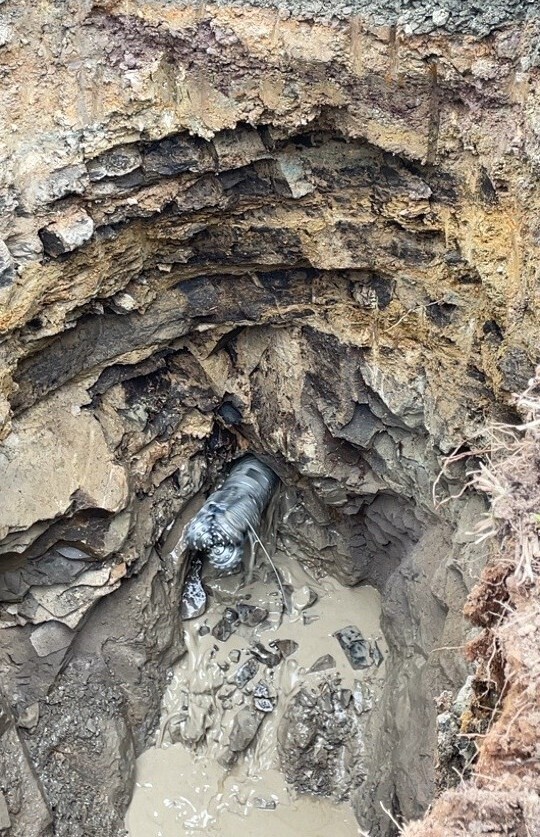
The terrain, the timeline and the unforgiving ground conditions quickly turned what should have been a straightforward fiber installation into a relentless test of patience, precision, persistence and the right equipment. Confined rights-of-way and strict traffic limits squeezed the jobsite to a sliver of shoulder along a busy two-lane highway. Then came the granite. A continuous granite vein stretching north toward the Maryland line slowed production, challenged equipment and set the tone for every mile that followed.
"This is a project that normally takes two to three years. We had ten months," said Connor Bass, area manager for Team Fishel.
There was no room for missteps. Every delay threatened the schedule. Every foot of progress had to be earned.
Against the clock
Most fibre builds allow for some flexibility. This one did not. The margin for error was razor thin. If the project slipped by more than 15 days, the financial penalties would wipe out a fifth of the contract's value. At 30 days late, the entire job would lose money.
"We had to get very granular in scheduling," Bass said. Four data centers were waiting on two fibre routes, and every day without connectivity meant millions of dollars in idle processing capacity.
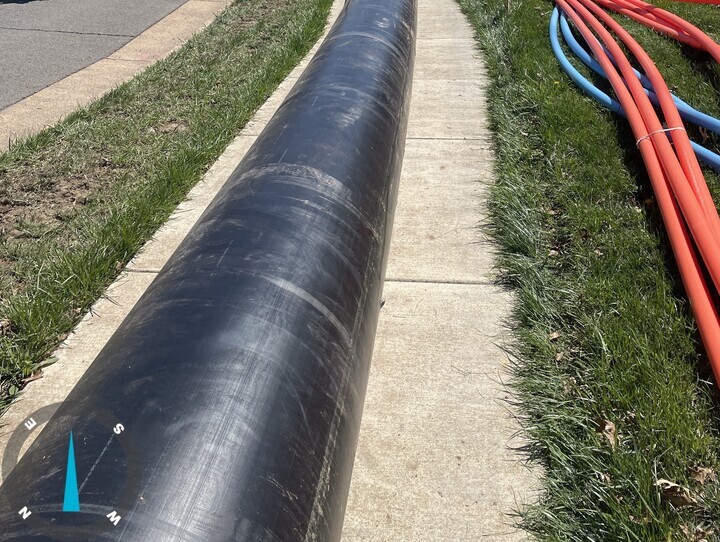
Planning began months before the first drill moved into position. Initial assessments anticipated varied soil conditions that would gradually improve along the northern route. However, that expectation quickly faded.
Crews encountered a continuous granite vein that shadowed nearly the entire route. Progress slowed to as little as 8 to 12 feet per day in many areas, which was made worse by the need to ream each bore multiple times to reach final diameters, which compounded production delays.
"Some days you mark the rod in the morning and hope it has been moved by lunch," Bass said.
At that pace, the schedule was unsustainable. Team Fishel knew they needed a new approach if they were going to finish this project on time. They doubled the drill count, deployed crews from across the country and rotated mechanics through night shifts to keep every drill rig ready. Even the tooling plan had to be rebuilt to handle nonstop granite.
Those moves bought time, but the fundamental challenge remained: finding equipment capable of performing consistently and reliably in solid rock and within extremely limited jobsite space.
Built for the job
Drill selection quickly became a defining factor. The jobsite pressed tight against Route 15, a narrow highway with constant commuter traffic. Larger rigs simply could not fit, and many rock-drilling systems lacked the durability to successfully push through the continuous rock conditions.
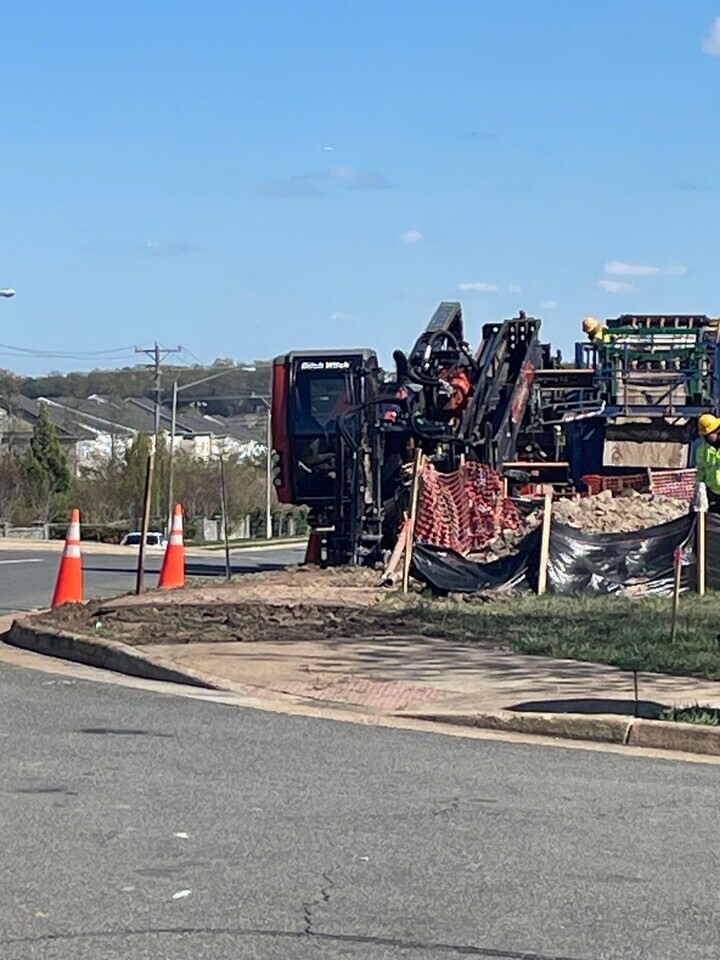
The team was tasked with finding a directional drill with two contradictory strengths: compact enough to operate within space-restricted rights-of-way, but powerful enough to pull heavy reamers through solid rock. The Ditch Witch AT32 directional drill checked both boxes.
"It was the only machine compact enough to navigate the tight jobsite and yet powerful enough to pull a 24in reamer through granite," Bass said. The All-Terrain system was essential to maintaining progress, providing stable torque and control through challenging ground conditions.
Conventional methods, including mud motors and air hammers, would have degraded rapidly under continuous rock loads. However, the AT32, with its direct mechanical drive, maintained steady power and minimised fluid reliance, which was a crucial advantage when pushing through tough ground conditions while operating on a tight timeline and compact jobsite.
By the time the ground revealed its true challenges, Team Fishel wasn't just using one AT32, they expanded their fleet of AT drills and upgraded tooling to accommodate for heavy rock. They worked closely with Ditch Witch's ACE team to prestock pumps, motors, swivels and wear components, ensuring swift replacements and zero downtime.
The AT32 became an indispensable workhorse that kept the project moving forward.
Power in partnership
Equipment alone wasn't enough to maintain the pace needed to ensure the project stayed on schedule. Support from the nearby Ditch Witch ACE dealership quickly became a daily lifeline.
ACE stationed a technician onsite almost every day to handle troubleshooting, monitor performance alerts through the Orange Intel telematics system, fine-tune mud mixes and coordinated replacement parts. This proactive support prevented minor issues from escalating into days of downtime.
"Most issues were fixed before management ever heard about them. That level of field communication is rare," Bass said.
To keep production steady, Ditch Witch stocked more than US$1 million in critical parts specifically for this project. In several cases, Ditch Witch and Team Fishel worked together to adapt components for extreme wear conditions.
"When something broke, the Ditch Witch team knew it needed to be there immediately," said Bass. "They did not ask what week it could be fixed, they asked where they needed to be in the next hour." With more than 25 drills operating, that level of responsiveness and repair speed made a measurable difference in productivity goals.
Shouldering the load
Route 15 presented Team Fishel with one of its most complex operating environments yet. The corridor serves as a key connection point between Virginia and Maryland, carrying significant daily traffic. Lane closures were not an option, which required all work to be completed from the shoulder within a narrow, active right of way.
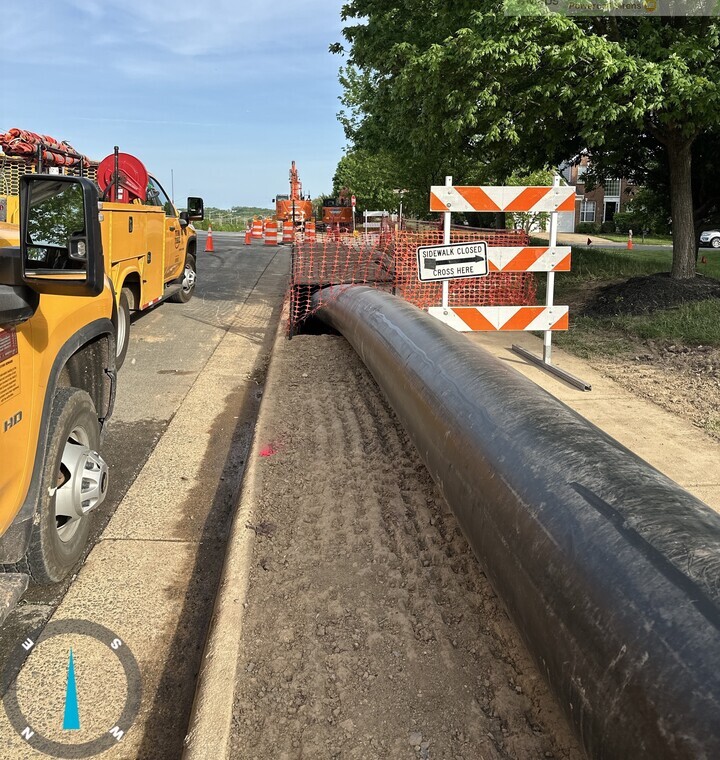
Crews operated in tight, uneven conditions with limited space for equipment. At peak activity, 160 Team Fishel Teammates from 15 states operated along the corridor, supported by more than 80 trucks moving through the site each day. Managing that level of activity in a confined, high-traffic environment required precise coordination, careful planning and constant communication. "Route 15 is an extremely difficult place to work, and the margin for error is zero," Bass said.
Maintaining safe traffic flow while advancing the project added another layer of complexity. With more than 25 rigs operating simultaneously, maintenance and logistics required disciplined scheduling and execution. Every aspect of the operation had to be tightly coordinated to keep crews productive and the project on track.
Rockin' and rolling
For weeks, the rock dictated the pace. Then things began to shift. The additional drills, upgraded tooling and steady on-site support proved to be the turning point.
Crews who once spent days watching rods move inches at a time found a new rhythm. They learned the patterns in the rock and the spots that slowed production. Reamer swaps became smoother. A bore completed ahead of schedule. Service cycles stayed on time. The work was still demanding, but the team no longer felt anchored by the weight of the rock beneath them.
Each incremental win built on the last, turning steady effort into measurable progress. The granite no longer set the tempo, the team did. Through the fall, momentum built week by week. Each completed section stretched farther, driven by precision, powerful equipment and unwavering dealer support.
On October 31, the final segment was set. Fourteen miles of duct bank were finished. A project that typically spans several years had been completed in just eight months, the result of a team that trusted the process and equipment that held up when it mattered most. Inch by inch. Foot by foot.
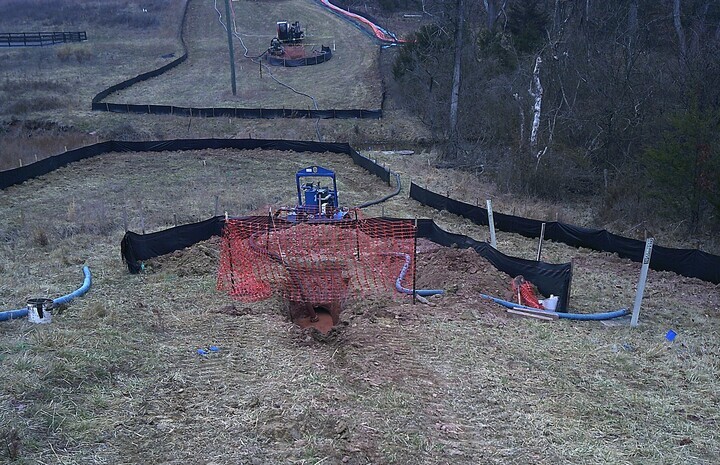
"I couldn't be prouder of our team," said Bass. "Dr. Joe C., the field PM and his team put in the work, trusted the plan and kept pushing. All the credit goes to them. The partnership with Ditch Witch and the reliability of those drills made a huge difference. The equipment held up, the support never stopped, and our crews delivered."
Foundation for the Future
The final bore didn't just mark the end of another fibre installation. It marked the completion of a project many crews would have considered nearly impossible under the same conditions.
Over eight months, Team Fishel drilled through relentless granite, a task they never took for granted, worked within some of the corridor's tightest rights-of-way and delivered the critical infrastructure needed to bring a major data center online. Every challenge demanded another adjustment, whether that meant deploying additional drills, refining drilling strategies or leaning on responsive dealer support to keep equipment operating at its best.
In the end, the rock never became any easier. The team simply became better at overcoming it.
"Anyone can build fibre in clean dirt," Bass said. "We take the work others often walk away from."
Today, beneath Route 15, the finished fibre quietly powers the digital connections people depend on every day. Most will never think about the work below their wheels. But for Team Fishel and Ditch Witch, every foot tells the story of what it took to get there.