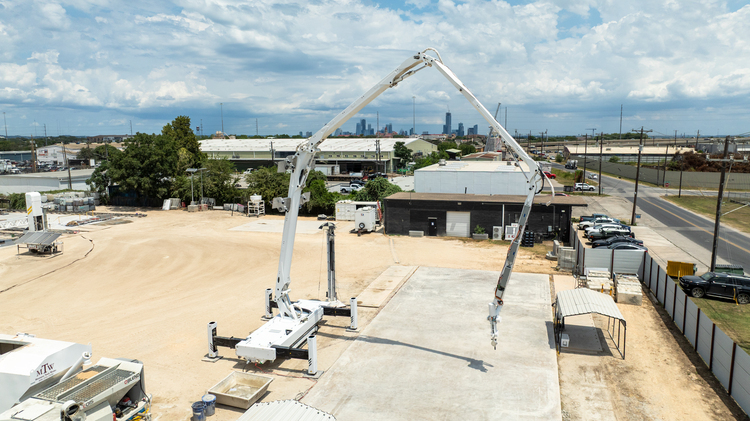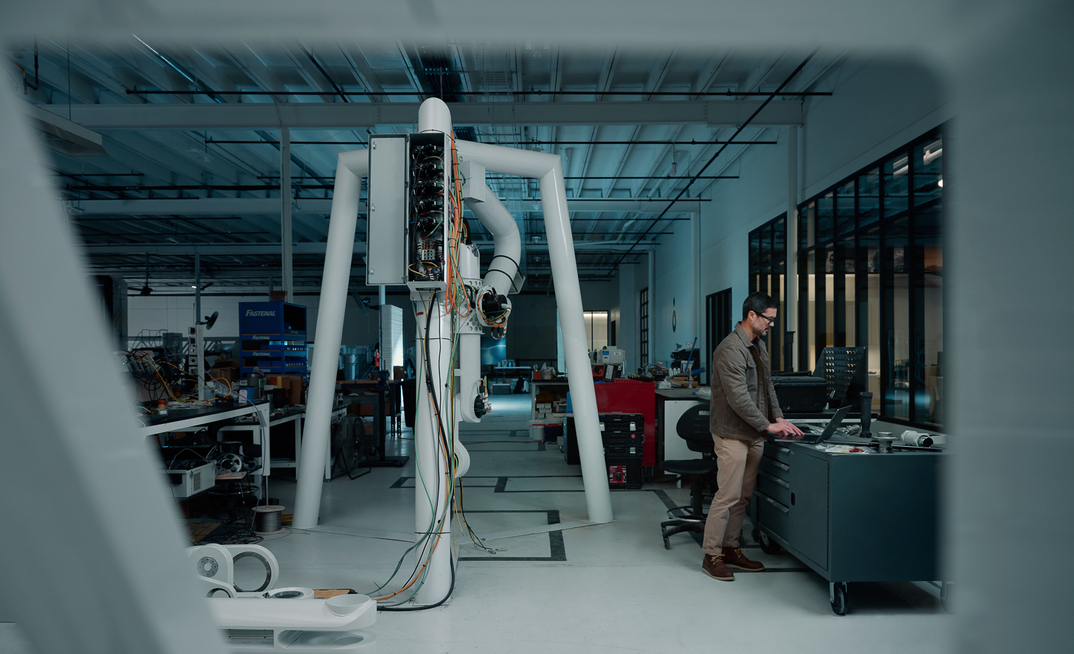


When companies from very different backgrounds, with very different skill sets, and which operate in completely different industrial markets announce a "strategic technology collaboration", the pairing could end up producing either a real dud or a true technological titan – literally, in the case of Icon's partnership with Palfinger.
The two companies – one a crane and lifting solutions manufacturer, the other a pioneer in robotic 3D printing – announced last month that they will continue to cooperate on the development of a larger version of Icon's Titan system, a large‑scale robotics and additive manufacturing machine.
Printed cranes
The technology could enable the automated "printing" of structures, potentially geogrids and soil stabilising structures, optimnised foundations, mine houses, and other machinery, up to 27 feet in height, and beyond.
Continuous production would integrate modular components, stabilizers and crawler systems to ensure system reliability, flexibility and cost efficiency during the "printing process", potentially opening up new opportunities in construction, mining and machinery production, among other sectors.
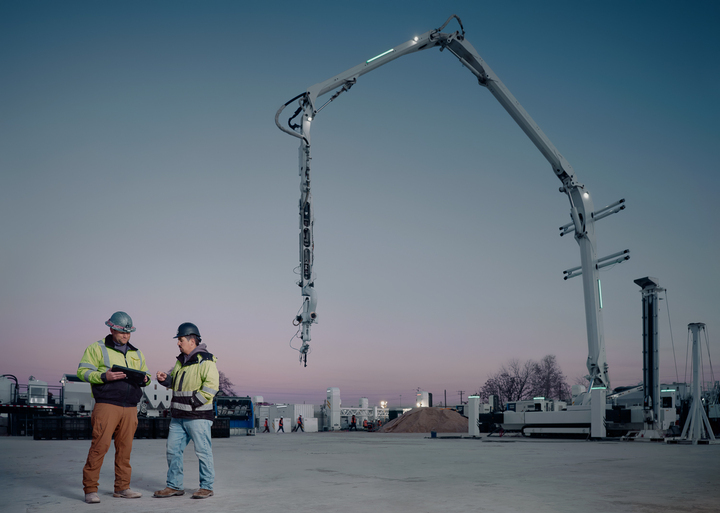
A core element of the larger system would be Palfinger's Special Lifting Solutions. This would provide the precise positioning, stability and scalability required for large‑size robotic 3D printing machine. By combining Icon's advanced 3D printing technology with Palfinger's engineering know‑how, the collaboration could see a scalable solution capable of manufacturing all sorts quite soon.
A prototype has already been successfully tested.
Jonathan Ladouceur, Icon's Vice President of Technology and Products, tells GDI the company has been working closely with Palfinger for about three and a half years on a large‑scale printer, a collaboration that both sides describe as highly successful.
"Icon is a specialist in robotics and autonomy, and Palfinger has a huge background in large motion control. There are many opportunities for robotics at scale. I can't speak about particular projects of course, but I think, in the next five to ten years, all areas of construction are likely to be disrupted in some way by robotics. Companies like Palfinger are looking to [adopt] robotics and automation solutions.
"We are ready to scale with them. And I would say there is more to come, as projects come to light. I see it as a very long and positive relationship."
Ladouceur, a mechanical engineer by profession, says almost anything can be manufactured using 3D printing. "It's really just a question of development, effort, time and money," he says, adding that the technology has rapidly evolved since its introduction twenty years or so ago.
Space race
Indeed, one market keen to adopt the technology is the space sector, with NASA recently awarding Icon a US$60 million contract to research and develop space-based construction systems to support future phases of the Artemis programme.
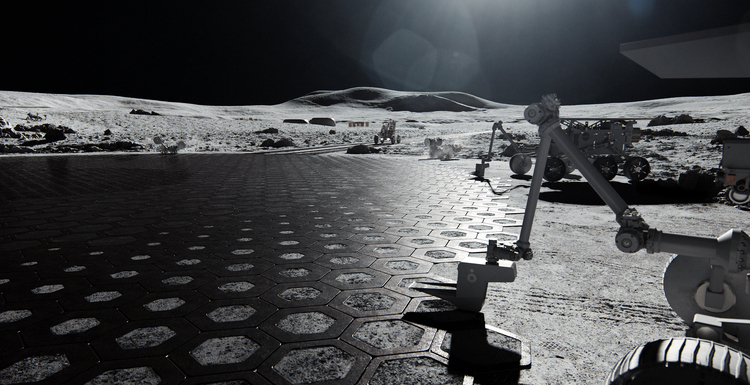
ICON's Olympus (above) is being touted as one such system capable of using lunar resources as building materials. Early doors, but the company intends to work with lunar regolith samples brought back from the Apollo missions, together with various regolith simulants to determine their mechanical behaviour in simulated lunar gravity.
The research is expected to inform future lunar construction approaches for the broader space community, including critical infrastructure, landing pads, blast shields, roads and, eventually, lunar habitation modules and buildings.
Closer to home, and civil construction contractors are seemingly chomping at the bit to get hold of the technology, following Icon's decision to roll out Titan for commercial purchase.
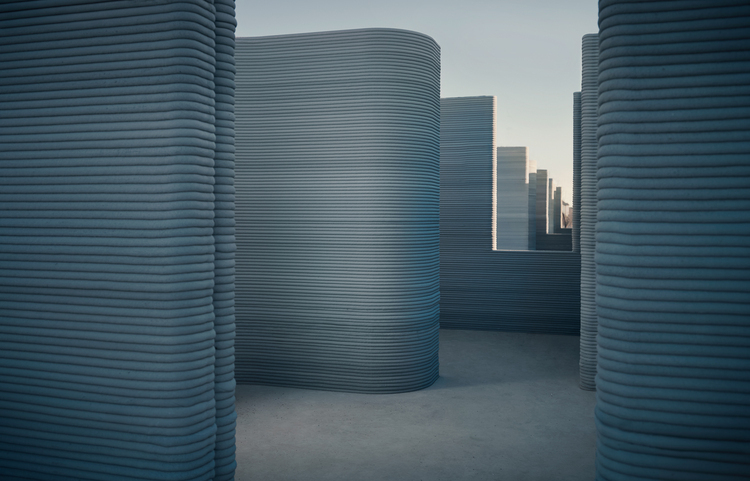
"After nearly a decade of research, development, and field operations, we believe it's time to put these technologies directly into the hands of other builders," said Jason Ballard, the company's co-founder and CEO. "The Titan programme is for builders who want to deliver higher quality homes at faster speeds and with lower costs. These are tools for builders who are tired of the status quo and want to be part of the solution."
Icon says Titan could help builders shave about 40% off the square foot cost of a conventional multi-story wall system.
Interested parties can request to join the list to acquire their own Titan system with a $5,000 deposit. First deliveries are planned for early 2027.