



In mineral processing, reliability is measured in tonnes. At the centre of every concentrator plant is a network of valves, pumps and control systems handling abrasive slurry, aggressive chemicals and essential plant services. When flow control performance drops, production losses follow quickly. For Ville Lindh, Industry Manager, Mining and Metals, Europe at Valmet, the challenge is clear. Flow control in concentrators must be engineered not just to function, but to endure.
Designing for abrasive reality
Concentrator plants present some of the harshest operating environments in mining. Slurry circuits move mixtures of ground ore and water that continuously attack internal surfaces. At the same time, utilities such as process water and compressed air systems must operate reliably to support the wider plant.
Valmet positions its offering across both areas. In slurry handling, the company's dedicated solutions focus on tight isolation and reliable control in high wear conditions. In utility services, valves and automation ensure stable plant operations even where media are less abrasive.
Isolation applications in slurry circuits demand zero leakage. Control applications, often integrated into OEM-supplied machines, demand precision. If a control valve performs poorly, the impact can be seen immediately as reduced production or even sudden shutdowns.
Elastomer technology for slurry handling
Within its slurry portfolio, particularly under the Flowrox range, Valmet relies heavily on elastomers as wear components in pinch valves, slurry knife gate valves and hose pumps.
Lindh explained the material choice in practical terms. When hard slurry particles strike a metal surface, they gradually remove material, leading to erosion and performance change over time. Elastomer surfaces behave differently. Their resilience allows them to absorb impact energy, reducing the rate at which material is lost.
In abrasive service, this resilience can translate into longer operating life compared with conventional metal wear parts. Over time, any material will wear, but the rate and behaviour of that wear differ. As Lindh noted, when wear affects control valves, it can change process parameters and alter performance. Managing that wear is therefore central to maintaining process stability.
Valmet can also consider ceramic materials. These can offer very high resistance to abrasion, although typically at higher cost. The selection ultimately depends on balancing performance requirements with lifecycle economics.
Positive displacement for high solids
Handling high solids concentrations presents additional challenges. In some concentrator duties, solids content can reach 60 to 80 percent.
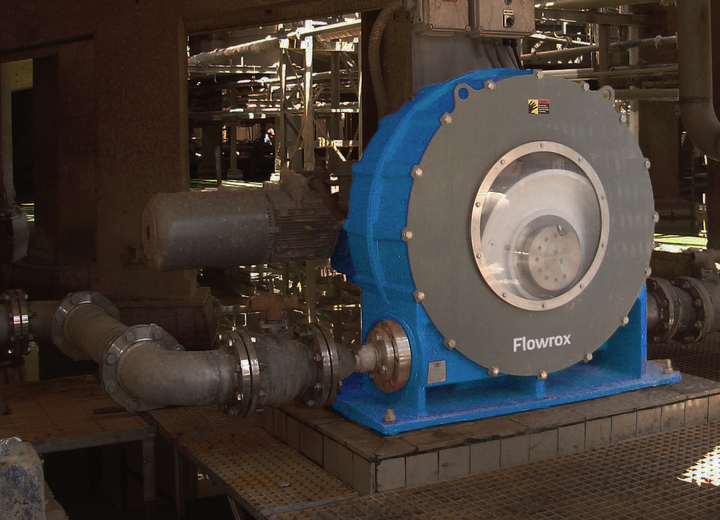
Valmet's hose pumps operate on a positive displacement principle. Each rotation of the pump delivers a consistent volume, which supports stable and repeatable flow. This characteristic makes hose pumps well suited not only for dense slurry transfer but also for chemical dosing applications where accuracy is essential.
Compared with centrifugal pumps, hose pumps can handle higher solids concentrations with less sensitivity to abrasive wear. However, centrifugal pumps remain better suited to very high flow rate applications. For Lindh, the key is selecting the right technology for the specific duty, rather than assuming a single solution fits all.
Maintenance engineered in
Wear in slurry environments is inevitable. The difference lies in how easily equipment can be maintained when that wear occurs.
Lindh emphasised that Flowrox products were designed with maintenance in mind. In remote mining locations, it is not always feasible for suppliers to maintain a constant on-site presence. Equipment therefore needs to be straightforward to service.
Valmet's approach has been to develop valves and pumps that allow faster maintenance work and simpler replacement of wear components. In some cases, customers must carry out maintenance themselves, particularly in isolated regions. Ease of service becomes a direct contributor to uptime.
Integrated valve automation
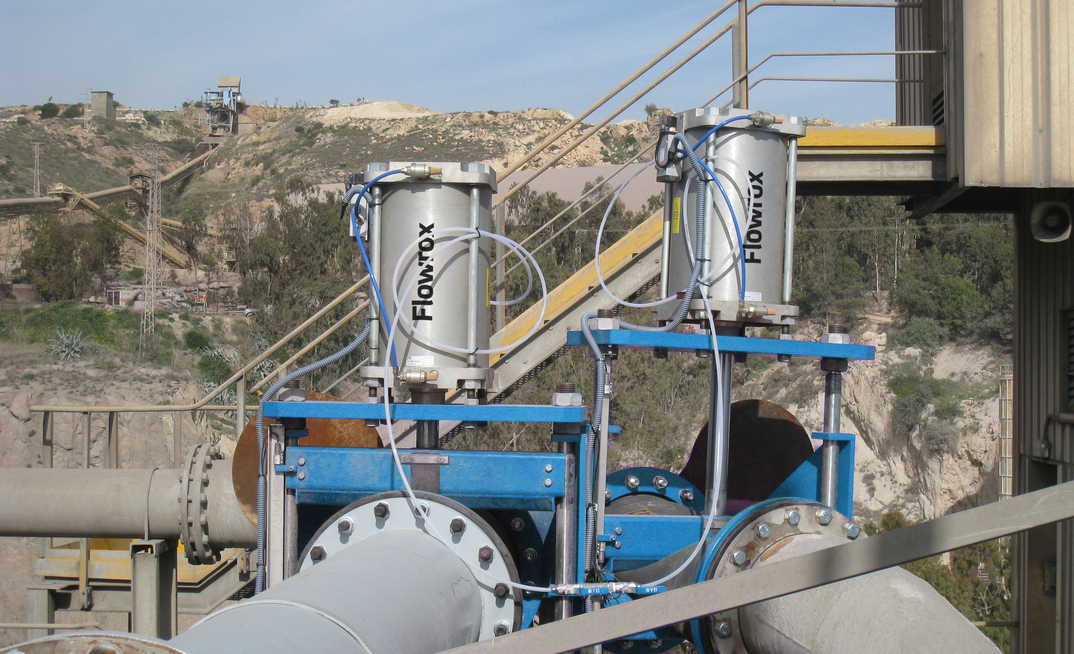
Reliable flow control extends beyond the valve body. Valmet supplies not only valves but valve automation systems designed to function as a unified assembly.
By engineering these elements together, the company aims to minimise mechanical looseness and ensure consistent performance in control applications. On top of the mechanical system sit digital valve controllers, which provide monitoring and diagnostic capabilities.
These digital solutions enable operators to follow performance trends and identify changes in valve behaviour over time. Predictive maintenance strategies become possible when data reveal early signs of wear or deviation.
Early engagement and project integration
Flow control performance is often determined long before a plant begins operating.
When involved at the front end of a project, Valmet can align its valves and pumps with the intended process conditions and generate value for both OEM customers and end users.
The same principle applies to collaboration with EPC contractors. Valmet seeks involvement from front-end engineering through detailed design, commissioning and into the operational phase. The goal is continuity, with service support extending beyond project handover.
As Lindh put it, flow control is Valmet's area of expertise. Ensuring that expertise is integrated from the beginning reduces risk later in the plant lifecycle.
One partner across the lifecycle
For mining operators, total cost of ownership reflects a combination of factors: maintenance frequency, wear life, process stability and service responsiveness.
Valmet positions itself as a single supplier capable of delivering valves, pumps and automation as a complete package. Customers working with one partner for multiple flow control elements gain clarity of responsibility and simplified communication.
The company is also investing in continuous product development, with recent acquisitions having strengthened Valmet's mining-focused expertise. And where direct presence is not practical, a partner network extends support capability.
Meeting the demands of critical minerals
Processing routes for certain critical minerals may involve specialised chemicals, increasing corrosion risks alongside abrasion. At the same time, concentrations of valuable minerals within ore can be extremely low. In such cases, process inefficiencies and losses are not easily tolerated.
In situations like this - where margins are tight and recovery rates are critical - reliable flow control becomes even more important.
Shaping the next generation
For Lindh, the future of reliable flow control lies in resilient materials and advanced valve control systems. Solutions must endure, support plant performance and adapt to evolving processing challenges. Reliability is not optional - it is the cornerstone of sustained production and efficiency.













