

Declining ore grades, increasing hardness variability and rising energy pressures are placing greater strain on comminution circuits. For many operations, the challenge is no longer just throughput, but managing variability in real time to protect stability, energy efficiency and recovery.
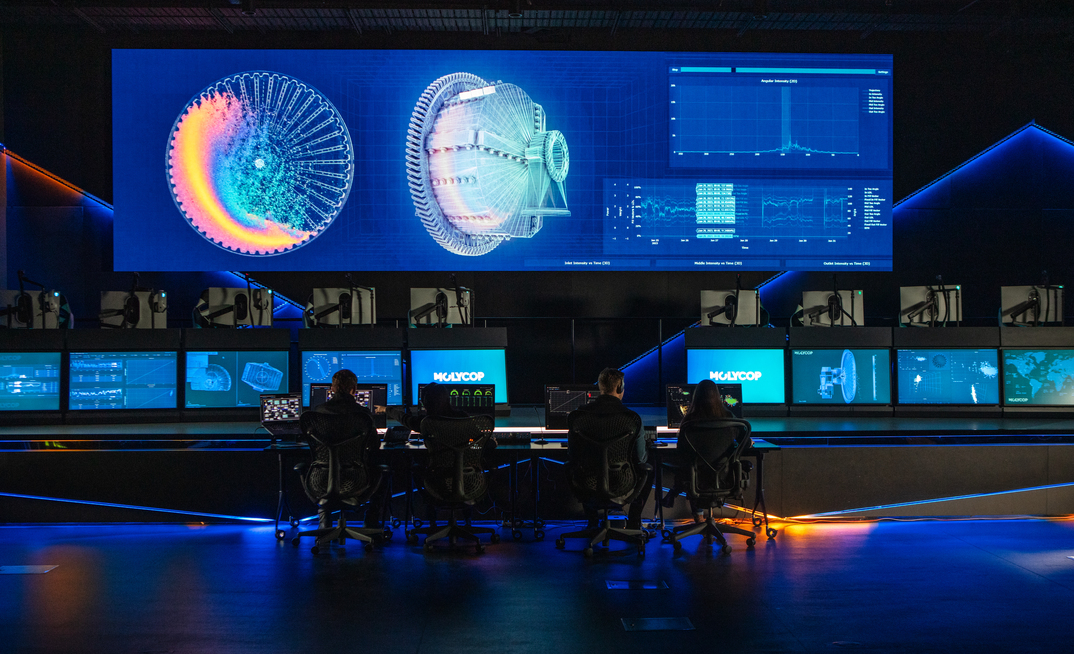
Molycop's OreVia platform was developed in response to this shift. Designed as a real-time process characterisation and optimisation system, it provides continuous visibility into rock, slurry and froth behaviour across the circuit. The aim is to support faster, data-driven decisions at critical control points and reduce reliance on reactive intervention.
In the following discussion, Darren O'Connell, President Technology, and Edgar King, Machine Vision Manager, outline how OreVia works in practice and the operational value it is delivering.

The mining sector is facing increasing ore complexity, energy intensity pressures, ESG targets and greater operational variability in comminution circuits. How did this industry reality shape Molycop's development of its OreVia system?
Darren O'Connell:
The reality of declining ore grades, increasing hardness variability, and rising energy pressures fundamentally shaped the development of OreVia. Our customers were facing more complex and less predictable comminution environments, yet were still expected to deliver higher throughput at lower cost and reduced carbon intensity.
We saw a clear need for real-time ore and process characterisation - not just periodic sampling or reactive control. OreVia was designed to give operations immediate visibility into what is happening inside their circuits, enabling proactive decision-making rather than post-event troubleshooting.
Our solution is focused on instrumentation to track the ore as it flows through the comminution process, particularly at critical points in the process where the ore can be returned for preprocessing or allowed to flow through to the next stage of the process. These are decision points where efficiencies and cost reduction can be achieved.
For readers across mineral processing who may be encountering it for the first time, how would you define OreVia in clear, practical terms - what it does, why it matters, and the specific operational gap it is designed to solve?
Edgar King:
In practical terms, OreVia is a real-time process characterisation platform that measures and interprets ore, particle size and slurry behaviour across the comminution and flotation circuit.
It matters because plants often operate with limited visibility across the process. OreVia closes that gap by continuously analysing rock, slurry and froth conditions. It is designed to solve one of the biggest operational challenges in mineral processing: variability. By quantifying variability in real time, it enables plants to stabilise performance, optimise grinding efficiency and respond faster to changing ore conditions.
From a plant perspective, how is OreVia deployed and integrated into existing site environments? What types of operational and metallurgical data does the platform utilise, and how does it fit within day-to-day workflows for operators, metallurgists and management teams?
King:
OreVia is modular and can be deployed across different parts of the circuit, including:
- OreVia Rock for rock characterisation on conveyors / feeders,
- OreVia Slurry for real-time slurry analysis, and particle size
- OreVia Froth for flotation froth velocity analysis and control.
The system integrates with existing plant control systems and historian databases, using a combination of machine vision, advanced sensors and data analytics. It provides useful data such as particle size distribution, slurry density, flow rates, froth stability indicators, mill power draw and other operational signals.
For operators, it provides clear visual dashboards and actionable alerts. For metallurgists, it delivers high-resolution data for circuit optimisation. For management teams, it supports KPI tracking aligned with throughput, energy efficiency and recovery targets.
The OreVia Slurry solution is particularly innovative. The technology has been used in the Chocolate manufacturing industry for many years where fine particle size and instrumentation that can be used in food grade environments is critical. The ability to measure particle size within a pipe without the need for sampling is a game changer.
Can you share practical, real-world use cases that demonstrate how OreVia supports decision-making on site - for example, in stabilising SAG mill performance, identifying circuit bottlenecks, or optimising grinding media and overall circuit efficiency?
O'Connell:
We've seen OreVia help stabilise SAG mill performance by detecting upstream ore variability before it impacts the mill. By identifying changes in rock size distribution or hardness, operators can adjust feed strategy or grinding parameters earlier.
King:
In flotation, OreVia Froth provides continuous froth characterisation, allowing operators to detect instability or air rate imbalances in real time. This supports faster corrective actions and reduces recovery losses.
Across the circuit, OreVia also provides insights that inform grinding media optimisation and liner wear strategies - aligning closely with Molycop's core expertise in comminution performance.
What improvements have customers been able to achieve so far in areas such as throughput, circuit stability, energy efficiency, downtime reduction or wear optimisation, and how quickly are sites typically able to see tangible value after implementation?
O'Connell:
Customers have reported improvements in throughput stability, reductions in unplanned downtime related to circuit disturbances, and measurable energy efficiency gains through tighter process control. The OreVia Slurry solution is extremely durable with very little maintenance. Inline slurry PSA instruments typically involve sample analysis, which is complicated, slow and the units can have up to 200 parts. In contrast, the OreVia Slurry solution is very simple, has only has four parts and requires no ongoing calibration once installed.
King:
In several deployments, sites have identified bottlenecks within weeks of commissioning. Because the system provides immediate visibility, tangible operational value is often seen within the first one to three months - particularly in terms of variability reduction and improved decision confidence.

How does OreVia fit within Molycop's broader strategy to deliver integrated products, services and digital optimisation, and what is the long-term vision and roadmap for the platform as a continuous performance partner for mining operations?
O'Connell:
Molycop has evolved from being solely a grinding media supplier to a full comminution performance partner. OreVia is central to that strategy. It allows customers to measure the performance of their circuit in real time, particularly size reduction. It connects physical products, technical services and digital optimisation into a unified performance framework. We have developed solutions that are camera based, allowing for more continuous readings so the outputs are more representative of the entire process. We use the process variables generated by the instruments in process control strategies and have engineered the solutions to be low maintenance.
King:
Long term, our vision is for OreVia to function as a continuous performance layer across the plant - integrating machine vision, advanced analytics and eventually predictive and prescriptive capabilities. The roadmap includes deeper integration with advanced process control systems and expanded analytics modules to support autonomous and semi-autonomous operation.
Ultimately, OreVia represents our commitment to helping operations move from reactive optimisation to sustained, data-driven performance improvement.