

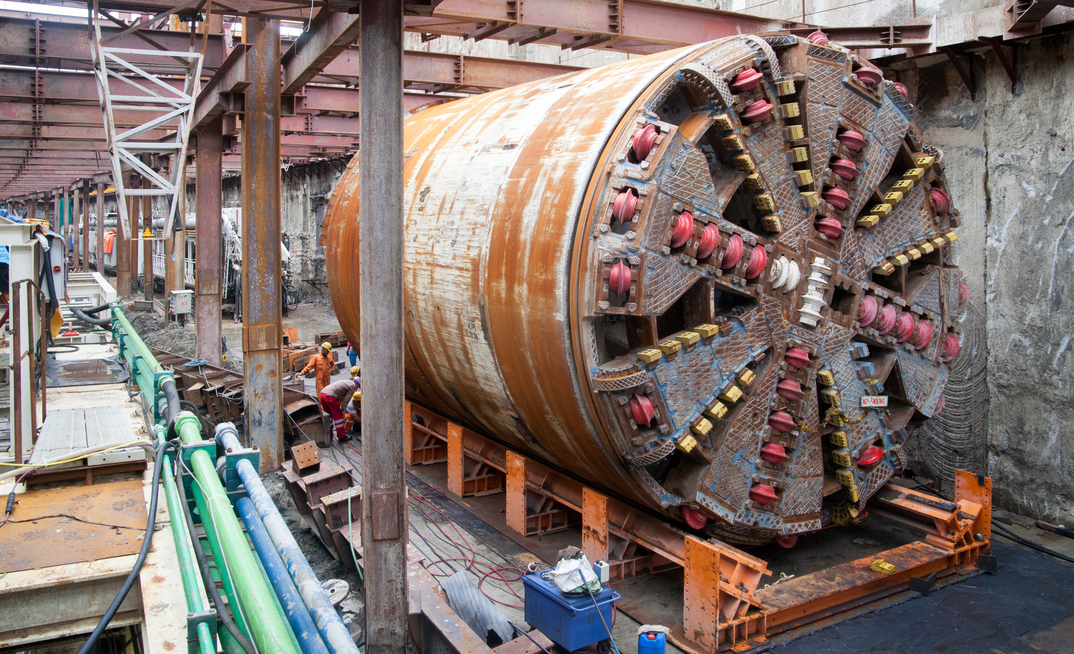


The biggest challenge in major Indian cities is space to launch and operate machines, says Steve Chorley, vice-president of operations at Robbins in the U.S. Indian metro construction sites are often not much larger than a football field.
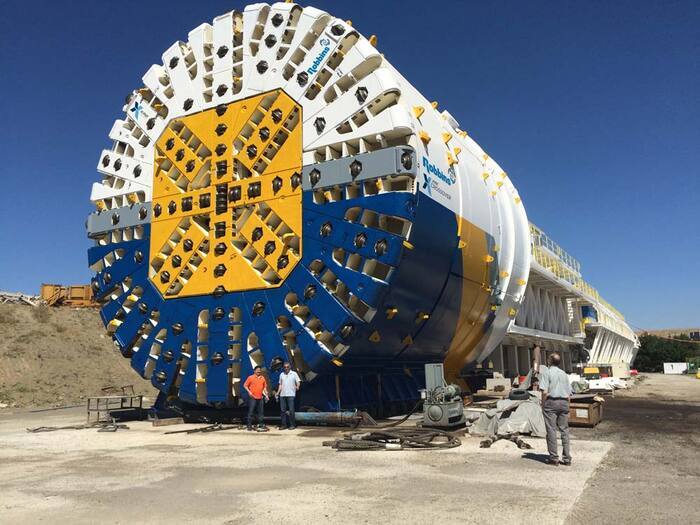
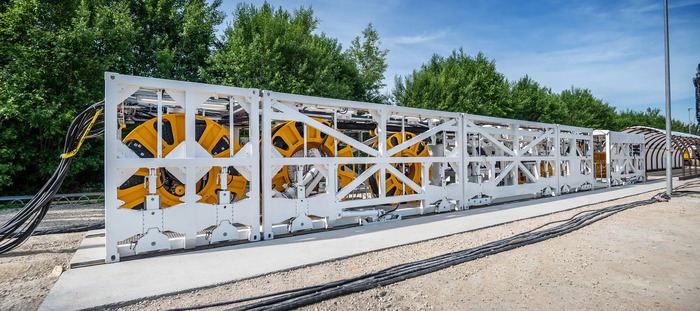
A metro sized boring machine is about 6.5m in diameter, and the required ancillary equipment is often about 120m in length.
Robbins TBMs were deployed on India's Delhi Metro in 2025, and are also being used on the Bhopal Metro Phase 1 project, which was about 20% complete as of early 2026.
A Robbins TBM 427 was the first of two Earth Pressure Balance (EPB) machines to be used by the Kalpataru Projects International (KPIL) / Gulermak joint venture to construct a series of three twin tunnels for the Orange Line of the Bhopal Metro. These tunnels will span a total length of 2.1km and are a key part of the metro's underground infrastructure.
YOU MIGHT ALSO LIKE

Chorley has been involved in tunnelling in India since 2007. Ventilation stations, utility supply substations, offices, tunnel lining storage areas and spoil storage areas all take up space, making good logistical planning essential. The risk, he says, lies in "speed without planning."
Delivery of larger machine components during machine assembly is planned for late night or early morning, he says. Launch shafts or pits are prepared ahead of time to allow underground chambers to be excavated so that shortened machines operating on umbilical cords can be deployed. The umbilical cords allow power, hydraulic, air and water feeds to supply the short machine. Full excavation can only start once the back-up structure holding all the ancillary equipment has been lowered underground.
It used to be said that an Indian metro system would take about 10% of cars off the road. That, says Chorley, hasn't materialised due to population growth. A major issue is removal of the excavated material. Heavy urban traffic makes the use of large spoil removal trucks difficult. If the machine is boring on dayshift, Chorley says, then excavated material is usually stored on site until late at night.
"This can limit the pace at which the tunnel is excavated," Chorley says. "Contractors need to take this into consideration when bidding and planning a project."
Compact rigs
Emergency situations are common during piling operations, yet a major weakness in many projects is the absence of a pre-planned emergency response mechanism, says Birendra Singh, assistant vice president at H.G. Infra Engineering in India. Most project teams "react only after a crisis occurs."
Every metro project, Singh says, should maintain a dedicated utility and crisis management team capable of handling emergency utility shutdowns, public safety incidents, coordination with authorities, and rapid redesign decisions.

Rajdeep Bhattacharya, chief project officer at LIFL in India, agrees. If debris evacuation is not planned scientifically, traffic congestion, unsafe road conditions; expansion of project footprint and public dissatisfaction can result, he says.
Metro agencies now typically require contractors to obtain approved traffic diversion drawings, traffic marshal deployment plans and junction management strategies before drilling begins. The direct movement of large dumpers may not be feasible but smart solution is using smaller carriers or loaders to shift debris to temporary transfer stations. There can then be bulk transfer using larger dumpers during off-peak hours, he says.
The biggest threat to safety is loose excavated soil near barricade edges
The challenge is not simply removing debris but maintaining construction productivity without expanding the project footprint. Instead of accumulating debris within the barricaded zone, there has to be continuous evacuation using a just-in-time logistics approach, Bhattacharya says. This needs to include immediate loading after bore excavation, dedicated dumping routes and GPS-monitored vehicle movement.
Bhattacharya, who has been in Indian infrastructure projects for 30 years, is a former chief project manager at Maharashtra Metro Rail Corp.
Restricted-space drilling in metro projects is one of the most complex urban construction activities, he says. "The approach has evolved far beyond conventional construction management."
The biggest threat to safety, he says, is the collapse or sliding of loose excavated soil near barricade edges. The presence of underground utilities directly below or adjacent to pile locations also has to be taken into account, as well as identifying deep legacy utilities which may lack proper records.
Restricted-space drilling in metro projects "cannot be executed using standard construction practices alone. Every location demands customized engineering solutions."
Soil stability
Bentonite, a natural, absorbent aluminum silicate clay is often used in drilling projects to stabilise the soil around a TBM and support excavation walls. In highly congested Indian areas, polymer slurry has often been preferred, Bhattacharya says. The use of polymer allows a lower slurry handling requirement, reduced spillage risk and a cleaner site. Full-length reinforcement cages are often difficult to handle in narrow metro barricading zones but can be beneficial in smaller segments.
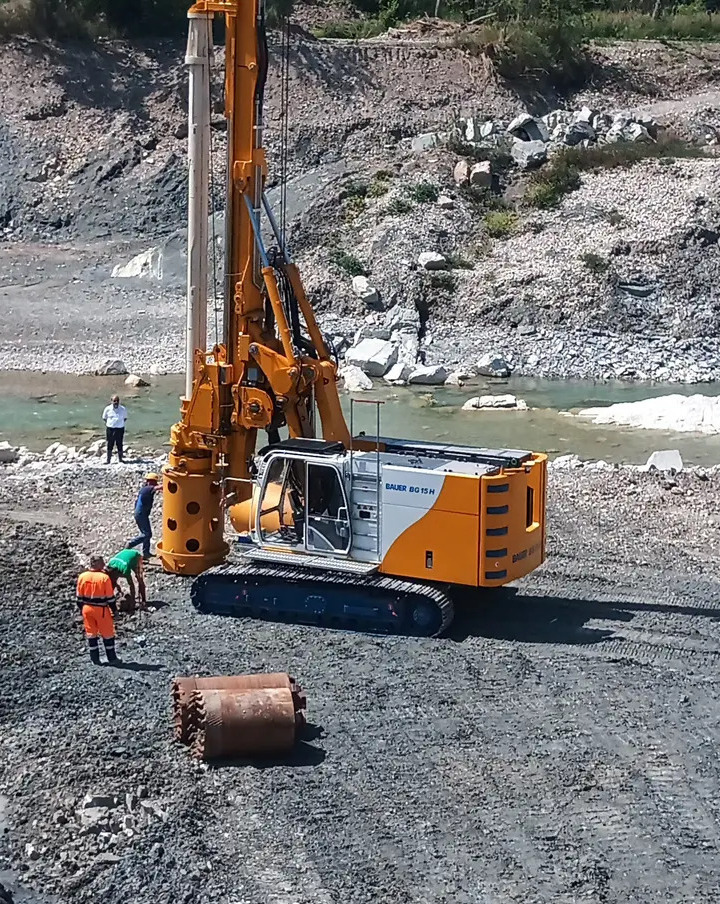
One effective approach, he says, is the deployment of compact piling rigs with reduced mast height and smaller crawler footprint. These help in areas with flyovers and overhead electrical lines, and allow reduced swing radius, a lower headroom requirement and better manoeuvrability.
Conventional metro piling rigs typically need a mast height of 18-22m and a working platform width of 8-12m. But manufacturers are developing more compact rigs with heights of 7–12m and swing radius of 2–3m. Bhattacharya cites the Bauer BG 15 H low headroom version, the Casagrande B125 XP-2, Soilmec SR-35 Blue Tech, and the AF series rigs developed by Italy's IMT.
H.G. Infra Engineering's Birendra Singh, meanwhile, recommends low-vibration piling techniques in dense urban areas. He points to rotary bored piling, continuous flight auger (CFA) piling, micropiles, and silent piling systems as being more suitable than high-impact driven piles, particularly near sensitive structures.
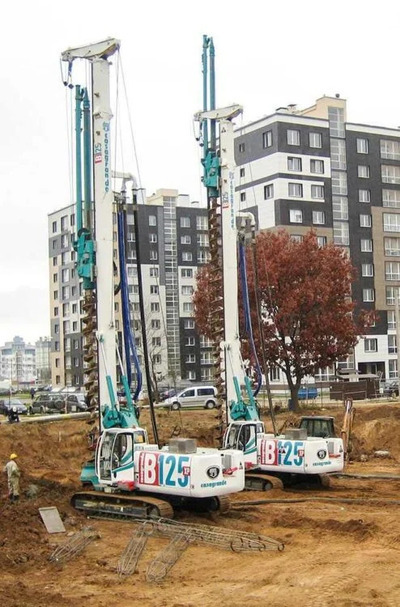
In some highly congested locations, even compact piling rigs cannot be deployed. In such cases, tripod drilling systems, although giving lower productivity, have proved effective, Bhattacharya says. Detailed geotechnical evaluation in some cases has made it possible to avoid piling altogether. Where soil conditions permit, open foundations, combined footing systems or raft-type solutions may be useful in locations with dense underground utility presence, Bhattacharya adds.
Lessons from Dubai
The debris removal issue of course is not unique to India. Removal at night is achieved with covered conveyor systems or specialized skips to avoid dust or noise, says Ossama Dakkour, an engineer and project manager who worked on projects including the Dubai Expo 2020 Metro, Etihad Rail passenger stations, and the Dubai Tram.

The point at which the connecting gallery meets the main running tunnel, or the "critical breakthrough" phase, is where the highest risk exists, Dakkour says. At depths of 20-26m, he says, there is high potential for water ingress.
Solutions include ground improvement techniques such as jet grouting, compensation grouting, or even freezing the ground to prevent collapse into the excavation area and ground water entry.
The risks, he says, can be reduced by the sequential excavation method, in which a series of corridors is created in a short distance while simultaneously observing how the earth responds to the excavation. The supports can then be progressively adjusted depending on how the earth reacts to the excavation process.
Digital twins
Dakkour points to the Bauer Cube System, developed by Bauer with Belgium's Denys. The system will enable diaphragm wall construction in very tight areas such as under bridges or inside buildings where tall rigs can't fit. The integration of real-time monitoring with Building Information Modelling (BIM) can allow "Digital Twins" of projects to be developed, Dakkour says. "This will allow us to simulate ground responses and visualize potential utility conflicts prior to drilling."
Detailed utility surveys are needed before drilling starts, says Sandip Sen, assistant general manager at Kalpataru Projects International. Ground Penetrating Radar and modern scanning systems can facilitate the task, he says.
Drilling is an integrated urban logistics system
Sen has been involved in metro projects including Indore, Bhopal and Kochi. The use of recast materials and modular systems helps to reduce site congestion, he says. Dust control and noise reduction systems are crucial to minimise disturbance in residential areas, he adds.
New technological developments have potential to help manage the challenges of drilling in restricted spaces. One of the biggest improvements in India, Bhattacharya says, is the rise of interface management frameworks. Modern metro projects now conduct regular traffic coordination reviews, co-ordination with utilities and emergency response simulations. Indian metro agencies, he adds, are also moving towards BIM-based planning and digital utility mapping.
Future drilling
Future drilling operations, Bhattacharya says, will use automated bentonite recycling plants, spill-proof slurry handling systems and smart sediment separation units.
"Drilling is no longer treated as an isolated activity but as part of an integrated urban logistics system," he says. The challenge is "not whether frameworks exist, but how consistently and uniformly these best practices are implemented."
Bhattacharya says that modern drilling technology is increasingly using AI for automated drilling controls, smart torque monitoring, real-time soil response analysis and predictive maintenance systems. Future drilling rigs, he says, will be capable of automatically adjusting drilling pressure, optimizing rotation speed, detecting abnormal underground resistance and giving early warning against possible utility encounters.
Chorley is optimistic that AI can improve efficiency while helping to mitigate the issue of shortages of skilled personnel, albeit at a slower pace than in other industries. Robbins can now operate machines autonomously from the surface if required. In future, he says, processes such as delivery and installation of tunnel lining will be automated. This, he says, will reduce the number of people working underground and improve safety.













