

With surging power demand for data centres around the world, enhanced geothermal systems (EGS) are gaining ground as a viable and cost-effective energy solution on a scale not seen before.
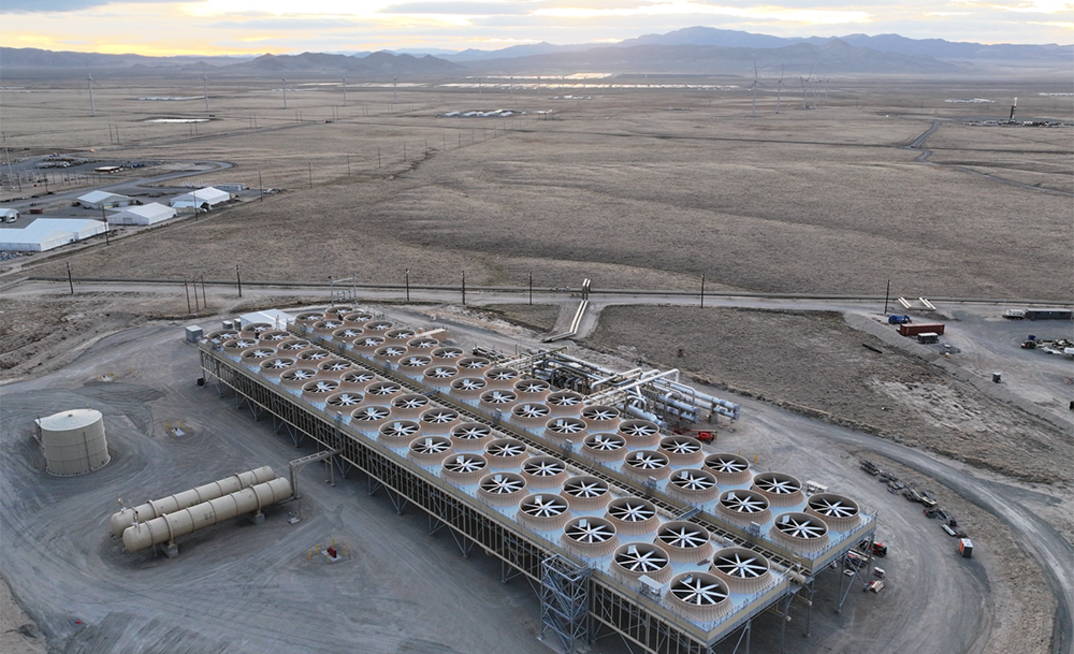
A case in point is the US$421 million non-recourse debt financing for the first phase of Houston-based Fervo Energy's flagship Cape Station development, a 500MW plant in Beaver County, Utah, scheduled to start feeding the grid later this year.
Phase 1 aims for a 100MW output in 2027, though this will be scaled up to meet demand in a subsequent development phase.
Investors seem to be chomping at the bit to get involved following a period of market inertia with non-recourse financing often considered out of reach for first-of-a-kind projects like Cape Station, which David Ulrey, Fervo's Chief Financial Officer, says is "disrupting that narrative".
YOU MIGHT ALSO LIKE
"With proven oil and gas technology paired with AI-enabled drilling and exploration, robust commercial offtake, operational consistency, and an unrelenting focus on health and safety, we have shown that EGS is a highly bankable asset class."
The $421 million financing package includes a $309 million construction-to-term loan, a $61 million tax credit bridge loan, and a $51 million letter of credit facility. Together, these facilities will fund the remaining construction costs for the first phase of Cape Station and support the project's counterparty credit support requirements.
RBC Capital Markets served as Fervo's financial advisor and was a coordinating lead arranger alongside Barclays, BBVA, HSBC, MUFG and Société Générale. Other participating lenders included J.P. Morgan, Bank of America, and Sumitomo Mitsui Trust Bank, Limited, New York Branch. White & Case LLP acted as sponsor counsel for Fervo, while Norton Rose Fulbright acted as counsel for the lender group.
"As demand for firm, clean, affordable power accelerates, EGS is set to become a core energy asset class for infrastructure lenders," said Sean Pollock, Managing Director, Project Finance at RBC Capital Markets. "Fervo is pioneering this step change with Cape Station, a vital contribution to American energy security that RBC is proud to support."
Financial support is largely a result of the success of Fervo's earlier geothermal achievement, Project Red, and the advances made in the technology needed to get geothermal power out of the ground and into the grid. This was by ostensibly adapting the horizontal drilling and multistage stimulation techniques used by oil and gas sector.
Another key enabler has been the pioneering use of Seequent's subsurface digital technology to optimise well placement, manage drilling risk, and ensure long-term productivity.
According to Fervo, this "digital-first approach" accelerated the pace of development, enabling pre-drill models to be sharpened as new information emerged during drilling campaigns.
Steven Fercho, Exploration Geoscience Lead at Fervo Energy said it was instrumental in determining "the best location of the wells before we drill. And, as we drill, we can update our models for continuous planning, which lowers risk and speeds delivery of our projects".
To date, using one rig, about 204,000ft has been drilled, of which 105,000ft was in granitic basement rock, across 20 fully horizontal EGS wells.
Seequent said in November last year that consistently high flow rates were achieved with 30-day flow tests confirming the ability to generate 10MW of power from a single well, tripling the power output per unit time compared to conventional geothermal systems.