

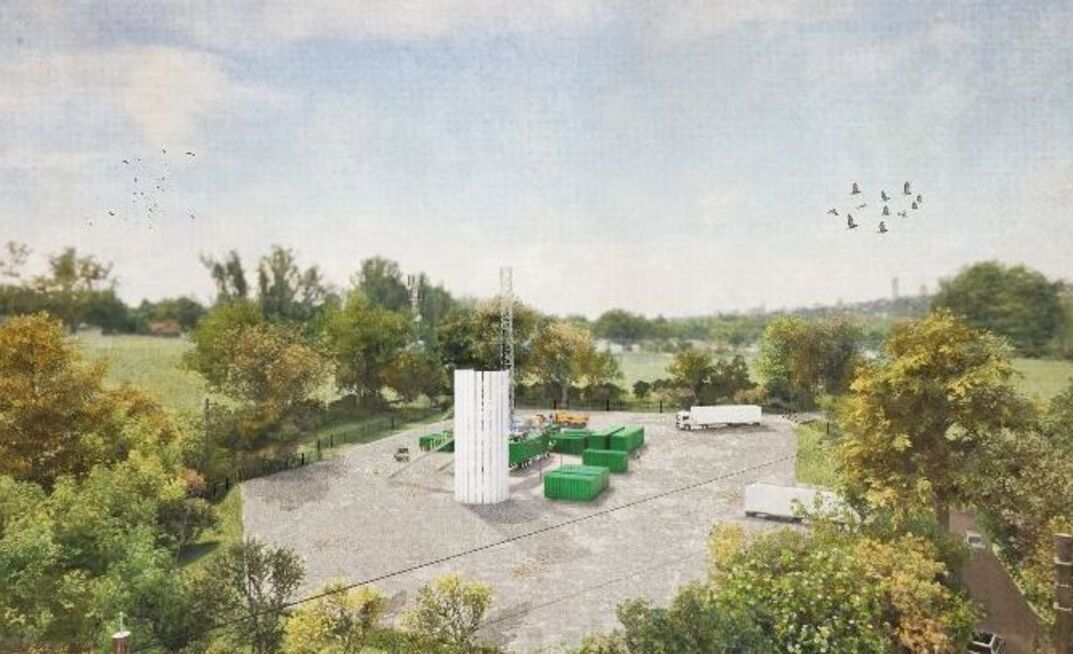


Lithium (Li) is a step closer to being extracted from what is potentially one of Europe's largest deposits following the decision by the UK to permit exploration of the hard rock and geothermal waters deep within Cornwall's unique geology.
The decision by Cornwall Council's Mineral Planning Authority could see Cornish Lithium extract up to 1mt of the Earth's lightest metal over 20 years as part of an ambitious plan to secure a domestic lithium supply in the UK.
Cornish Lithium now has the green light – following 2023 review of historic mining data, 3D modelling and preliminary exploration – to take its Copper House Lithium Project at Burncoose, near Redruth, Cornwall, to the next stage.
The next phase will involve site preparation and the drilling and testing of two exploration boreholes to depths of 2000m. If this proves fruitful, a second phase will result in the drilling of larger commercial-scale production boreholes followed by the installation and operation of a demonstration-scale lithium extraction processing plant.
This will assess the quantity and quality of lithium in the extracted brine, but Corish Lithium says the geothermal heat would be sufficient to support existing and future operations as well as local housing.
Commenting on the significance of the project, Martin Geissler, a Vice President at Cornish Lithium said: "The UK Government's Critical Minerals Strategy aims to produce 50,000t of lithium in the UK by 2035 and Cornish Lithium has a key role to play in contributing to that objective."
At depths of around 2,000m the temperature of the brine reaches around 80°C so geothermal heat as a by-product of lithium production could be a game-changer for Cornwall's horticulture and agriculture sectors, as well as residential heating in the years to come.
"We look forward to evaluating the lithium and geothermal heat production potential of our Copper House Lithium Project facilitated by this planning consent when all the data has been gathered and analysed," said Geissler.













