

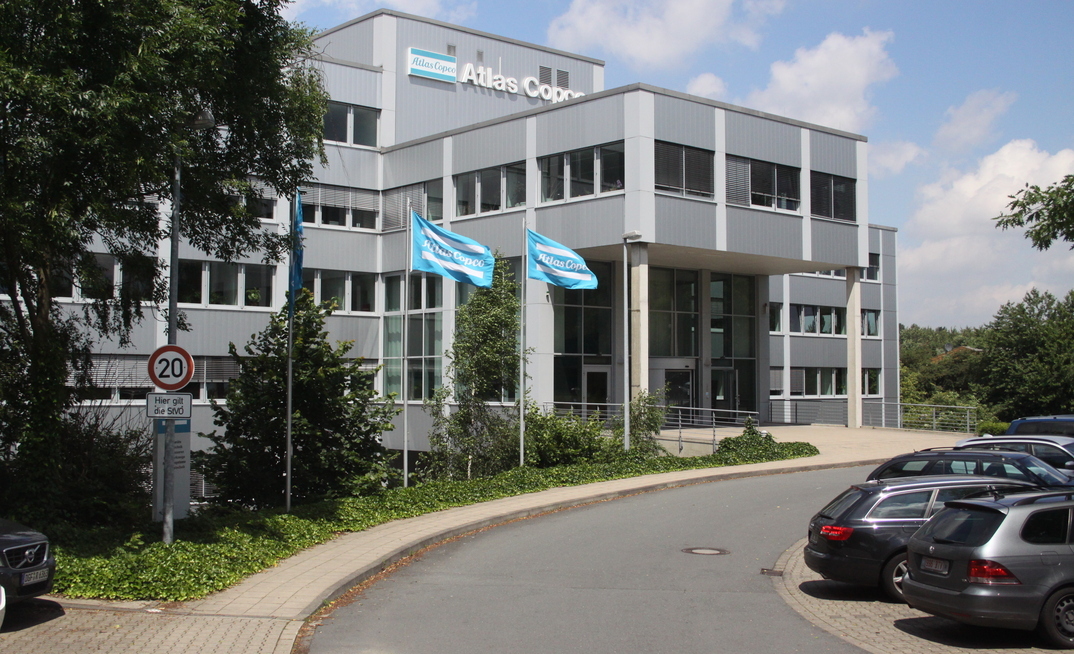


Atlas Copco has reported a 2025 order intake down 3% on the previous year, resulting in a revenue of SEK168,343 million against SEK176, 771 million in 2024, as geopolitical tensions, rising protectionism and shifting government priorities begin to bite.
In the global technology company's Annual Report for 2025, published today, Atlas Copco President and CEO Vagner Rego says that while some market conditions can be mitigated, tariffs and rules that prevent trade "are more concerning".
Macroeconmic factors are reported to have affected order volumes for industrial compressors, with demand weaker in the first half of the year.
Demand for gas and process compressors remained robust, apart from Africa/ Middle East, where order intake decreased. Order intake for vacuum equipment was mixed, with increased orders for industrial and scientific vacuum equipment, while orders for vacuum equipment to the semiconductor industry remained basically unchanged.
The demand for power equipment was also mixed, with decreased order volumes for portable compressors, while orders for portable power and flow equipment, such as generators and portable pumps, increased notably. Order intake for industrial pumps also increased.

"As we look back at 2025, I am proud to share how Atlas Copco Group continues to build on our foundation to deliver on our mission of sustainable, profitable growth. While the macroeconomic environment remains uncertain, our response is clear: we thrive by focusing on what we can control", said Rego.
"We will continue to invest in innovation, customer partnerships, and strategic growth opportunities. Our focus is on delivering technologies that improve productivity, competitiveness, and sustainability for our customers. All while maintaining the agility and resilience that define Atlas Copco Group. In doing so, we create long-term value for all stakeholders."
The Swedish multinational last year completed 29 acquisitions and invested 4% of revenues in R&D. However, Rego said growth is not linear and the increased resources and investments must go hand in hand with efficiency and measurable outcomes. He also indicated that the availability of low-carbon electricity was also a limiting factor.
"Most of our products already run on electricity, and we provide alternatives where possible to the ones that are not yet electrified. We continuously improve productivity in close partnership with our customers through increased efficiency and optimization. We are doing our part. What is still needed is broader global engagement and the development of energy sources that support both us and our customers."













