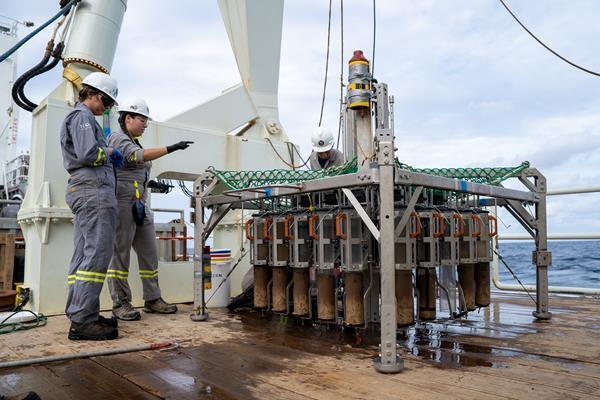


Seabed miner The Metals Company (TMC) and its subsidiaries have submitted deep-sea exploration data to an open database managed by the International Seabed Authority (ISA).
Seabed exploration data comprising biological and geochemical samples from across the eastern Clarion Clipperton Zone (CCZ), a 4.5 million km2 fracture zone in the Pacific Ocean between Hawaii and Mexico, builds on a decade of research by Nauru Ocean Resources (NORI) and Tonga Offshore Mining (TOML).
The TMC subsidiaries' work categorised the polymetallic nodule resource and surrounding marine environment from the ocean surface through the water column to abyssal sediments more than 4000m deep.
The dataset is publicly available through open repositories including DeepData and UNESCO's Ocean Biodiversity Information System (OBIS). To date, nearly 200,000 scientific papers have been published on polymetallic nodules globally, including more than 50,000 focused on the eastern CCZ.
The ISA has awarded 16 CCZ exploration contracts raising concern over the environmental impact of removing nodules from the seabed. Opponents often argue "we don't know enough but that narrative doesn't hold up against the evidence," says TMC Environmental Manager, Dr. Michael Clarke.
"As with any resource project, the science is not perfect, and we will continue to learn and adapt after production begins. But it is, by any reasonable measure, more than sufficient to begin monitored commercial operations. The conclusion has been consistent for more than 50 years: with the right safeguards and monitoring, the environmental impacts of nodule collection can be effectively managed."
In January, TMC announced that it had submitted the first ever consolidated application under NOAA's modernized regulatory framework, a permitting pathway that is anticipated to reduce permitting timelines and is available to applicants with sufficient environmental and technical knowledge.
TMC, which has developed a riser technology to obviate the need for seabed drilling, expects the final granting of a commercial recovery permit within the next 12 months.