

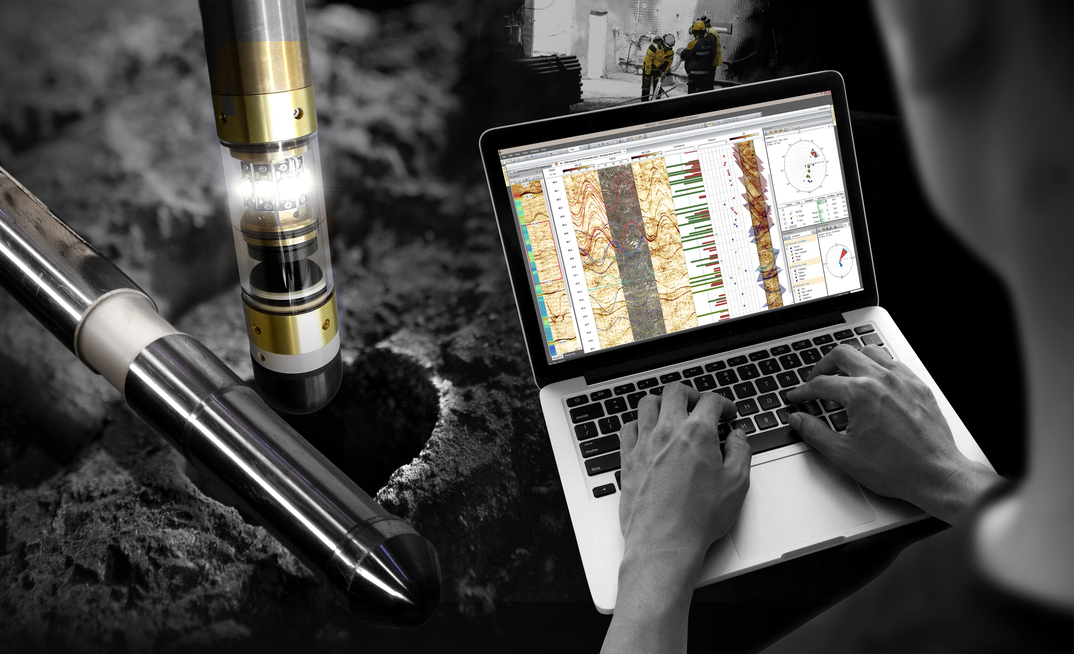


Advanced Logic Technology (ALT) has released the latest version of WellCAD, marking a significant expansion of the company's new Geomechanics module.
Along with a range of powerful enhancements designed to streamline workflows, WellCAD 6.1 builds on the previous version, with enhancements across core modules and improved stability and bug fixes for a smoother user experience.
Key features include a comprehensive rock mechanics calculation, stress modelling, and fracture stability tool; Box Plots, a data visualisation solution for exploring distribution and variability across wells, zones, or lithologies; and Spider Plots, an intuitive radar chart for comparative multi-parameter analysis.
An updated Geomechanics Workspace, designed for subsurface engineers, geomechanists and geoscientists, helps accelerate rock mechanics analysis, stress modelling and fracture stability workflows by automating key calculations, enabling teams to focus more on interpretation and decision-making.
By addressing geomechanical risks early, ALT says it helps de-risk operations, avoiding costly delays and safety issues before they escalate.
As an integrated add-on module that connects with the wider WellCAD platform, it allows users to carry out geomechanical analyses within the same environment.
A standout feature is the module's extensive reference library, which compiles the most academically and industrially recognised methodologies for property estimation. These are organised by lithology type, enabling users to quickly identify and apply the most appropriate calculation approach based on rock type.
The new release also includes a customer-specific development delivering a new KS (resistivity) and GK (radiometry) processing plug-in for WellCAD.
The plug-in supports end-to-end interpretation workflows for Kobra and DLL3 tools, covering signal smoothing, segmentation, environmental corrections, lithology attribution, permeability (filtration coefficient) calculation, and grade-thickness (GT) computation.
The development replaces legacy interpretation workflows and provides a consistent, auditable framework for resistivity and radiometry interpretation aligned with site-specific geological and operational constraints.













