

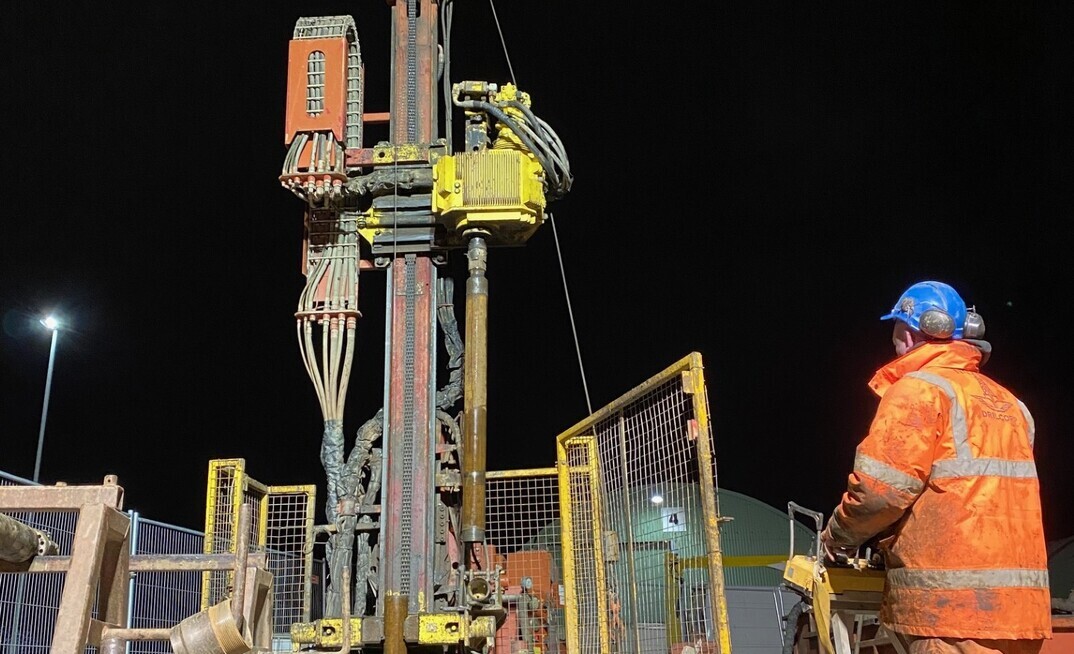


The National Geothermal Centre (NGC) has just celebrated its second anniversary as the UK's independent, authoritative, not-for-profit geothermal advocacy organisation, with the primary aim of accelerating UK geothermal uptake.
Strongly supported by its founding organisations Durham University (partnering with the Reece Foundation), the Net Zero Technology Centre, and Shift Geothermal, the NGC combines decades of experience, some of which includes the most high-profile geothermal projects in the UK.
Working across industry and closely with the Renewable Energy Association under an MoU, we are using our skills, knowledge and connections in Academia to support new drilling projects. But why?
Energy crises
The UK faces an energy crisis. We rely heavily on gas for heating our homes, industrial processes and for electricity generation and have been a net importer of gas since 2004.
YOU MIGHT ALSO LIKE
Gas used within the UK is supplied via three main routes. Around 40% comes from UK continental shelf production, which has been in decline over the past 25 years and anticipated to stop altogether by 2030.
A further 45% is supplied via pipeline predominantly from a single gasfield in Norway (Ormen Lange). But production here is also declining with no set date for exhaustion but figures suggest this could be anticipated within the next 10-20 years.
The final portion of our supply (around 15%) comes to the UK as LNG (liquefied natural gas) which is shipped from as far afield as Peru and Angola. While there is no suggestion that LNG production is in decline – in fact production grew 4% in the first half of 2025 – the UK's heavy reliance upon gas imports exposes us to single points of vulnerability, failure and geopolitical shock.
It's a gas
LNG is expensive compared to pipeline gas, primarily because of the compression and transport required, it is also carbon intense. In 2024, LNG accounted for 15% of UK gas imports, but was responsible for 46% of the carbon emissions associated with burning gas. The UK government continuously competes with those of India, China and many other importers to secure ongoing LNG supplies for the UK.
Additionally, LNG is expensive and remains vulnerable to global geopolitical shocks, the last being in 2022 when the invasion of Ukraine caused the cost of gas imports to more than double to £50 billion split 50:50 between pipeline gas and LNG.
The current conflict in Iran sets us back into a similar situation and due to declining production in the UK and Europe in as little as seven years, we may need to find alternatives to offset gas imports or risk a severe energy crisis.
The National Geothermal Centre believes that the solution lies closer to home and represents an asset of strategic national importance.
The UK's vast geothermal resources align well with the energy demand currently supplied by LNG imports and also the UK's demand for heat allowing us to switch these carbon intense and costly gas imports for homegrown energy.
Project InnerSpace
The UK geothermal resource is vast, calculated by Project InnerSpace as 3900GW of heat and 25GW of electricity yet less than one percent is currently developed – 1GW of heat mainly from ground source heat projects and 3MW of electricity generated by Geothermal Engineering, based in Cornwall. The production of geothermal electricity in February 2026 being a major first for the UK.
The National Geothermal Centre has set targets to increase uptake to 4.5GW of heat and 250MW of electricity by 2035.
These targets are achievable and based upon geothermal sector growth observed by our near neighbours on mainland Europe who have similar geological resources but better deployment environments due to supportive strategies and market incentives.
Geothermal energy can be developed almost anywhere and has a high level of technology readiness (8-9) compared with other, at scale, low carbon heat generation options. Geothermal systems, particularly those for heat decarbonisation, could be deployed within a few years to reduce and rebalance our energy demands.
To help close the geothermal gap, the National Geothermal Centre is currently preparing a strategy to be shared in autumn outlining how development of UK geothermal resources can be achieved allowing the UK to take back control of its energy supply and reduce spend on gas imports whilst decarbonising our homes and businesses.
The NGC has recently launched its own podcast series Strictly Geothermal, where industry figures across the sector drill down on some of the topics included in this article.
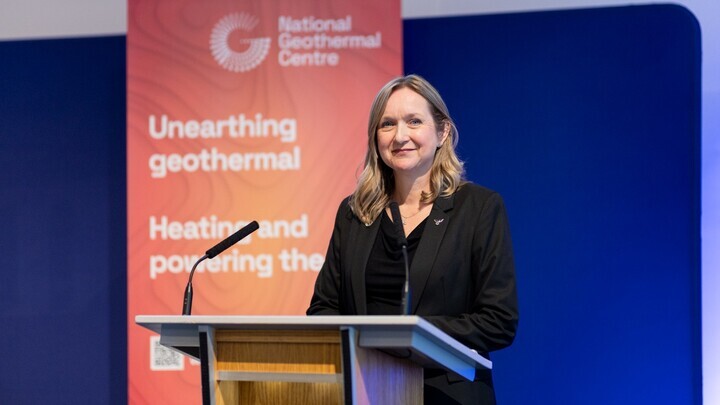
* Charlotte Adams is the CEO of the National Geothermal Centre (NGC), a not-for-profit geothermal advocacy organisation set up in 2024 to accelerate UK geothermal uptake













