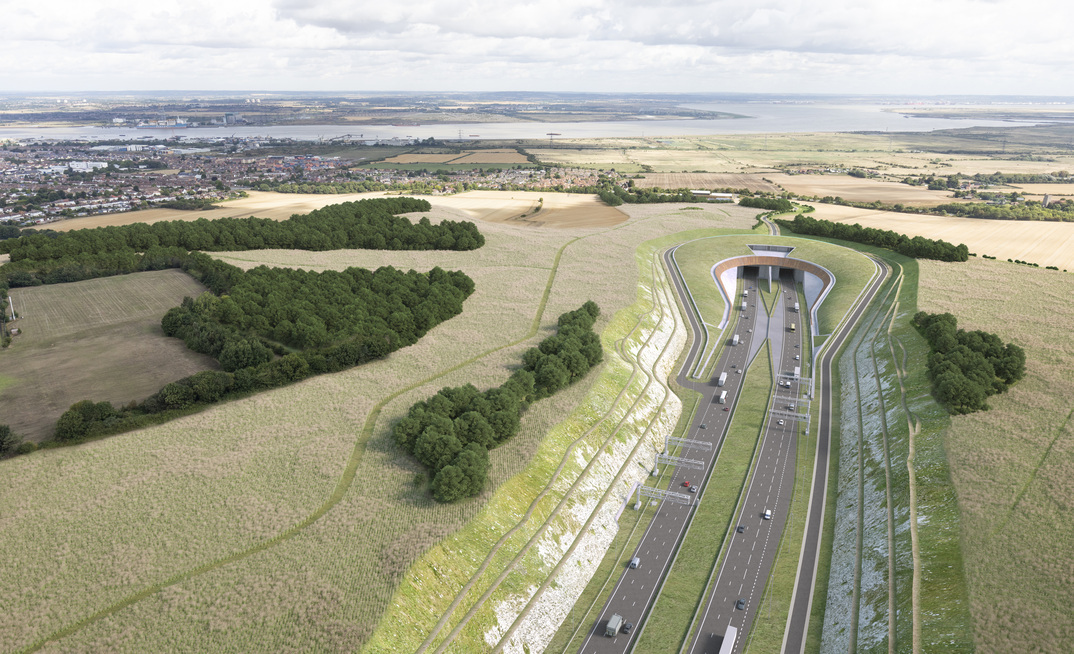


Tunnelling machine manufacturer Herrenknecht has been selected to build a 5000t TBM for the planned Lower Thames Crossing, set to be the UK's longest road tunnel.
Germany-headquartered Herrenknecht is scheduled to deliver the tunnel boring machine to the site to start work in 2028.
National Highways, the government-owned company responsible for modernising, maintaining and operating England's road network, says the new road is on track to open in the early to mid-2030s.
At 16.4 metres in diameter the 120m long machine will be the largest ever used in Europe, and the third largest ever in the world. It will dig two parallel tunnels, each more than twice the size of the existing tunnels at Dartford and big enough for three lanes of 70mph traffic.
YOU MIGHT ALSO LIKE
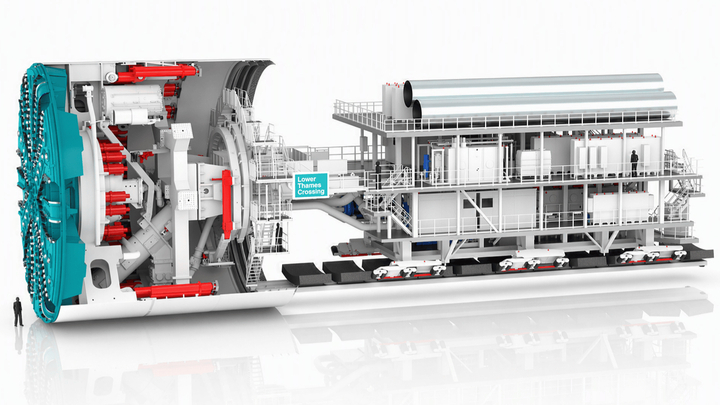
Due to the machine's size it will be delivered to site in segments by sea and carried up the River Thames and delivered to the Port of Tilbury.
Despite being one of the world's largest tunnels, it will have one of the smallest carbon footprints, as carbon emissions have been significantly reduced. Innovations such as using low carbon concrete to line the tunnel, and changing the design to build less, will help the Lower Thames Crossing be the first major infrastructure project to be carbon neutral in construction.
The 2.6-mile-long tunnel will be the longest road tunnel in the UK, with a tunnel chosen instead of a bridge to avoid impacts on local communities and protected important wetland bird habitats.
The Lower Thames Crossing is designed to blend into the landscape with around 80% of the 14.3 mile route in the tunnel, a cutting, or behind an embankment.
Shaun Pidcock, delivery director, Lower Thames Crossing said: "Choosing our partner to supply the giant tunnel boring machine means real progress on the project – and we'll put it to work as soon as it arrives on site in 2028."
The machine will be built at Herrenknecht's facility in Germany and operated by the Bouygues TP Murphy Joint Venture, which will own the machine
JV's tunnel construction director Didier Jacques explained his team is working in close collaboration with Herrenknecht on the TBM's detailed design. "Our focus remains steadfast: working at pace to reduce carbon emissions, pioneer innovative solutions and embed safety at every stage of construction," he said
Herrenknecht said the TBM will be largest variable density machine it has ever built. The machine will also be equipped with the largest accessible cutting wheel ever built by the German OEM.
Herrenknecht's Frédéric Battistoni said it will also incorporate several industry-firsts, with the machine designed to adapt to changing ground conditions while enhancing safety, efficiency and logistics during tunnelling operations. "The machine will support the excavation of both tunnel drives through a planned U-turn configuration," he said,
It will be a variable density machine to dig through the water table and varying geologies, such as clay and chalk up to 60m below the Thames. It will be powered by electricity from renewable sources.
A single machine will be used to dig both tunnels to save money and reduce the project's carbon footprint. The machine will begin tunnelling near the Port of Tilbury in Thurrock in 2028, before being turned around to create the second tunnel.