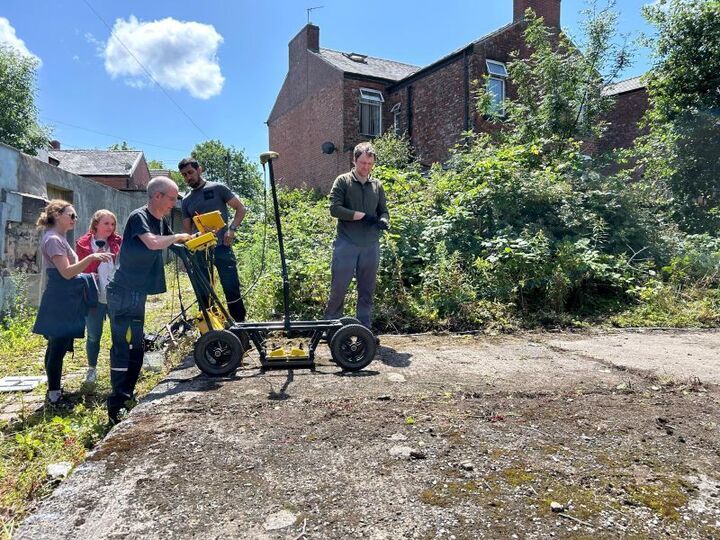


Working in partnership with the University of Lancashire, Keele University and Locate International, specialists from RSK Geosciences and RSK Materials and Structures have contributed to a missing persons investigation using ground-penetrating radar (GPR) and core sampling.
A team of geophysicists, drillers, forensic anthropologists and archaeologists are working on a "site of interest" in the search of a woman who went missing in the 1960s.
Though investigators have so far been unable to locate the woman, the project has shown the potential for using geotechnical drilling and site investigation techniques to improve the understanding of how the technology could be used to investigate sites in this and future cases.
RSK Geosciences Associate Director of Geophysics Stephen Owen said: "The opportunity to contribute our ground investigation skills to this project has been an eye-opening experience.... In day-to-day work, this will involve looking for things such as buried foundations, obstructions or voids, buried service cables and pipes, as well as mapping the depth of bedrock. By its nature, it can also be applied to forensic science."
The forensic geoscience team at Keele, led by Dr Jamie Pringle, worked with charity Locate International to review publicly available information and identified a housing estate in Manchester as a potential site of interest in the case.
The Keele team conducted a GPR survey over the foundations of demolished garages, where it found anomalies in the ground and began investigating further.
Two sets of GPR surveys, one by the Keele team and a second by the RSK team, were carried out to enable data to be corroborated, building a stronger evidence base. However, to understand what the GPR had detected, it was proposed to drill and extract samples for analysis.
Before this could happen, the RSK Geosciences geophysics team conducted a second series of GPR surveys to identify and map any buried services so that these could be safely worked around during the drilling phase.
This process also enabled the findings by Keele to be independently corroborated.
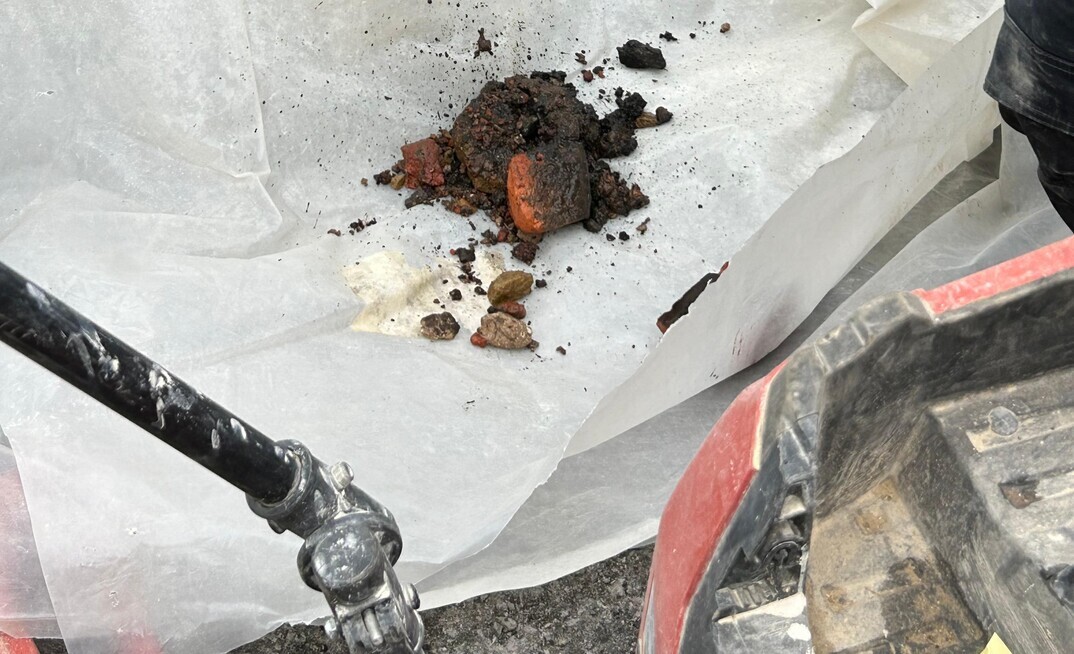
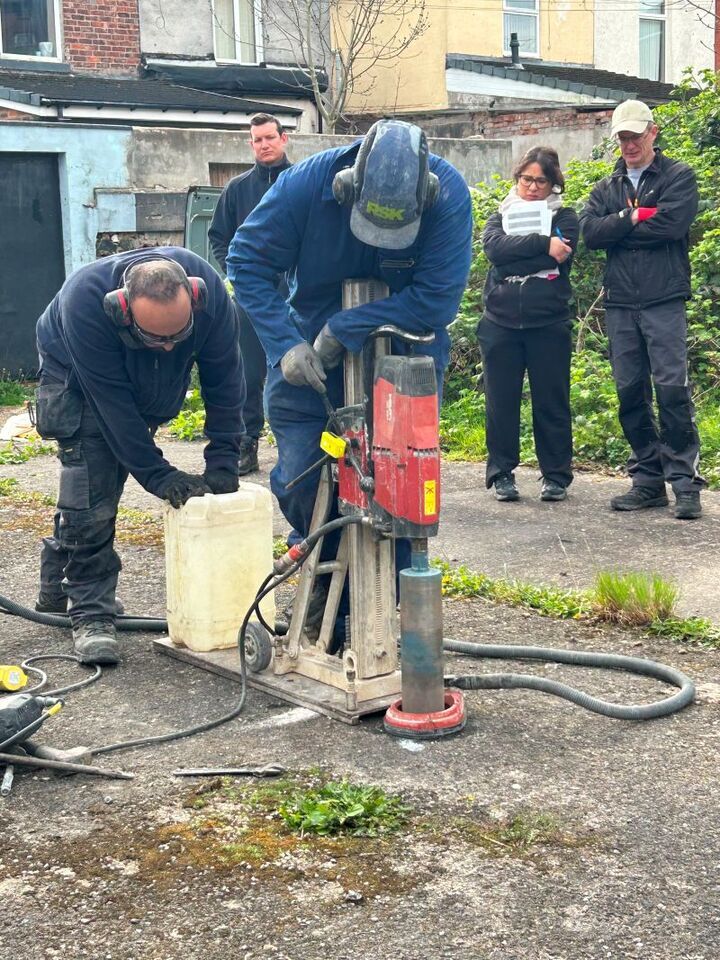
"The RSK Materials and Structures team then drilled a series of core samples through the concrete base of the garages to see what was underneath," Owen said.
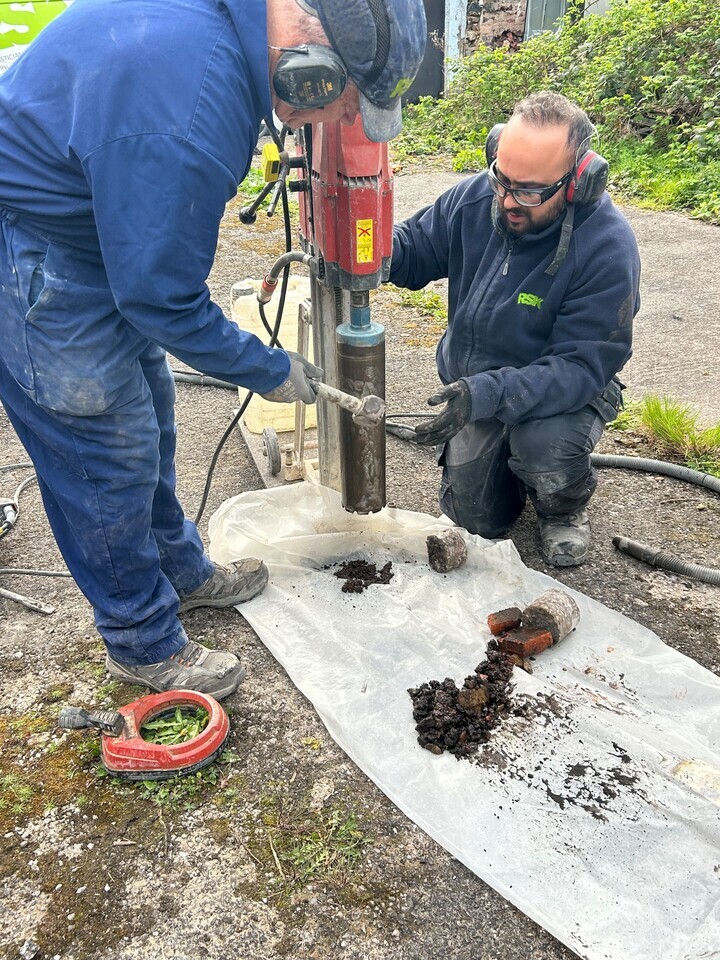
According to Owen, the process returned "interesting findings", which enabled the team to conclude that the area had been used as a rubbish tip during the construction period of the garage foundations and that this was the reason for the GPR results.
The RSK team has worked in partnership with Keele University for a number of years on its geophysics programmes, supporting the delivery of teaching modules and co-authoring papers.
Keele University's Dr Jamie Pringle said: "RSK's expert involvement has been crucial on this missing person investigation. While we have the academic knowledge and research from controlled studies, RSK's extensive experience and expert intrusive ground investigations team made a real difference and outcome in this cold case. The victim's daughter was also present on-site and was extremely grateful for the team's efforts here."
Forensic Anthropologist at the University of Lancashire Dr Allie Stewart coordinated the project and provided anthropological oversight throughout the investigation. She said: "It was an interesting case. There is not a lot of published work on how to search for human remains under large, undisturbed areas of concrete. We really benefited from working with colleagues from other institutions to come up with the best search strategy possible for a complex site like this."