

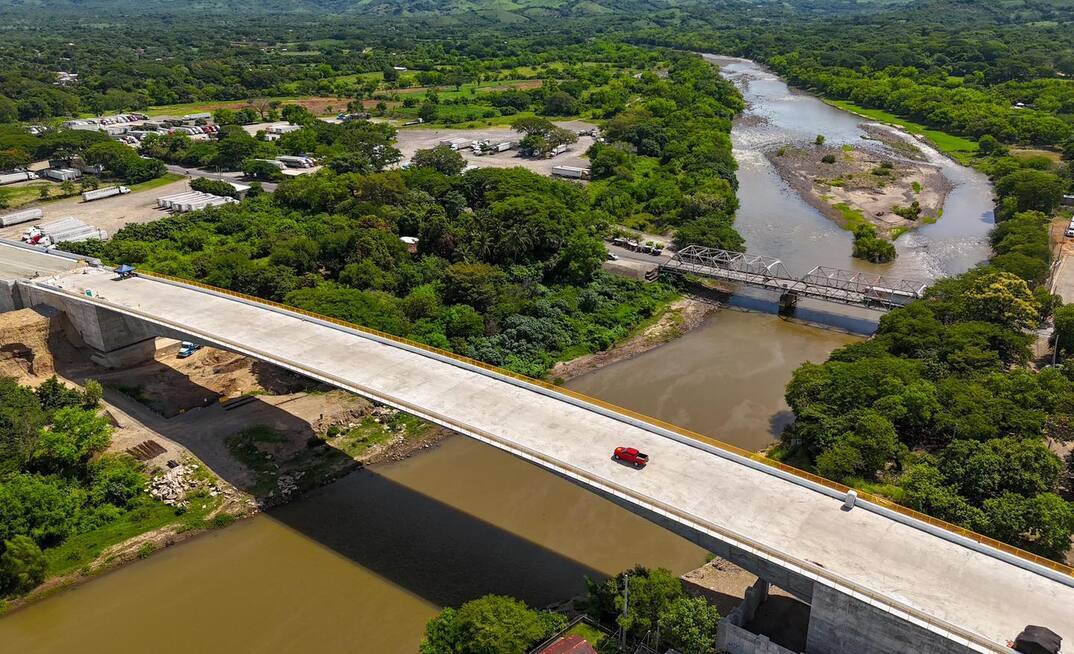


In the heart of Central America, where infrastructure plays a pivotal role in regional development, the General Manuel José Arce Bridge stands as a symbol of engineering resilience and binational cooperation.
Located at the Hachadura border crossing, this newly constructed bridge connects El Salvador and Guatemala, replacing an outdated structure that had long hindered the flow of goods and people.
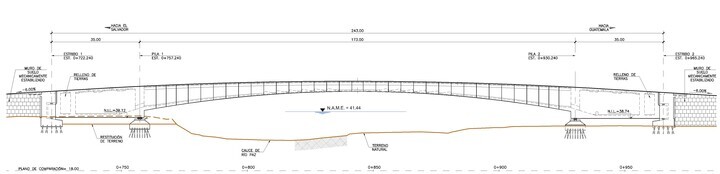
This segmental cantilever bridge, stretching 243m with a central 175m free span and supported by micropiles, showcases not only technical excellence but also adaptability to complex local conditions - from seismic challenges and "goat-size" alluvial soils to logistical constraints and administrative hurdles.
The project was conceived to address a critical infrastructural need at the Hachadura border crossing, a vital commercial corridor between El Salvador and Guatemala.
YOU MIGHT ALSO LIKE
The existing bridge, constructed in 1961, had long exceeded its design capacity and functional lifespan.
With only two narrow lanes and no pedestrian sidewalks, it was originally built to accommodate loads up to 270kN. However, modern freight vehicles often exceed 360kN, forcing authorities to restrict traffic to one direction at a time, a significant bottleneck for trade and mobility.
Beyond its structural limitations, the existing bridge faced environmental challenges. The Paz River, which it spans, experiences dramatic rises during the rainy season (May to October), often leading to traffic interruptions due to safety concerns. A partial collapse in 2011 underscored the urgency of replacing the aging infrastructure.
Recognising the strategic importance of this crossing, through which 45% of El Salvador's exports to Guatemala flow, the San Salvador government prioritised the project.
The new bridge was designed to be a modern structure with four lanes and pedestrian sidewalks, totaling 20m in width.
Geopolitical context
To fully appreciate the significance of the General Manuel José Arce Bridge, it is essential to understand the broader geopolitical and economic landscape of the region.
El Salvador and Guatemala are relatively small countries in terms of size and resources. El Salvador has a population of approximately 6.3 million and a GDP per capita of around US$5550, and Guatemala has more than 18 million inhabitants and a GDP per capita of US$6150.
Both countries share a common challenge: the need for resilient infrastructure to support economic growth and regional integration. Infrastructure projects like this bridge are not just engineering endeavors; they are national milestones.
In El Salvador, the country that developed the project, the bridge's construction was closely followed by the public and the media, reflecting its importance in facilitating trade, improving mobility and enhancing safety.
Building a singular bridge in these countries is, in itself, a significant logistical and technical challenge. Besides that, the bridge's location at the border, far from major urban centers, also posed logistical challenges.
Access to the site typically required overnight stays in the capital followed by long drives to the remote border area. This added complexity to both the design and execution phases, especially in terms of transporting equipment and coordinating international teams.
Geotechnical conditions
From the outset, the bridge's design faced formidable challenges, particularly in terms of geotechnical conditions and seismic vulnerability.
The site's geology varied significantly between the two shores. On the El Salvador side, the subsurface profile was heterogeneous, consisting of weathered pyroclasts and alluvial deposits. Soft, fractured volcanic rock appeared in some areas, and standard penetration tests (SPT) revealed inconsistent soil strength across elevations.
In Guatemala, the situation was even more complex. The soil was dominated by deep alluvial deposits, 15–20m thick, composed of alternating layers of sand, gravel and large boulders, many made of andesite.
This material was described by the team as "goat-size alluvial" due to the size of the boulders encountered.
Traditional SPTs were largely ineffective, prompting the use of seismic tomography and vertical refraction microtremor profiles to assess subsurface density. These conditions rendered conventional piling or drilled shafts unfeasible.
What's more, the site lies in a high seismic zone, with a peak ground acceleration of 0.915g.
The micropile advantage
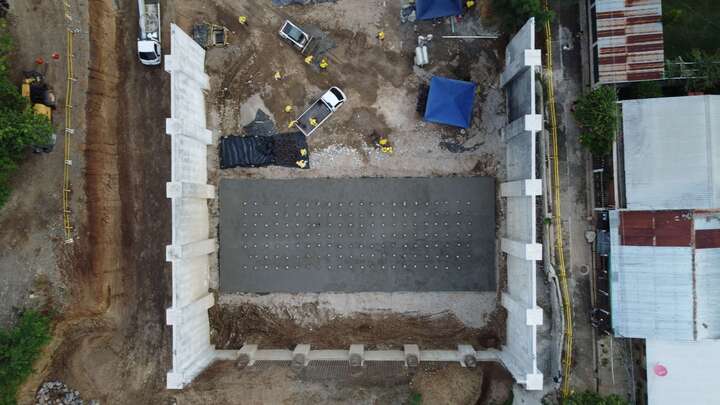
To overcome these conditions, the design team proposed micropiles for foundations. This solution, unprecedented at this scale in the region, offered the ability to penetrate through the difficult upper soil layers, socket into the competent rock below, and provide high capacity in both compression and tension, crucial for resisting the overturning moments of a cantilever bridge.
The revised design also incorporated seismic isolation devices, specifically sliding isolation pendulum bearings, between the deck and the foundation.
These isolators significantly reduced shear forces transmitted to the micropiles. The use of inverted supports at the abutments allowed for efficient balancing of compression and tension reactions, reducing also the foundations and improving the structural performance.
The foundation plan called for a total of 468 micropiles. Each pier foundation has a pile cap of 23 x 8m supported by a dense grid of 154 micropiles, and each abutment is supported by 80 micropiles, each with a drilling diameter of 240mm. These were reinforced with N-80 steel pipes (168mm OD, 10mm wall thickness). Selection criteria focused on balancing load capacity with drilling feasibility, given the constraints of the awarded contract and the urgency of execution.
Comprehensive testing
Three full-scale load tests were conducted; two on the Guatemalan side and one on the Salvadoran side. These tests included advanced instrumentation such as tell-tales and strain gauges, demonstrating that working in developing regions does not imply a compromise in technical sophistication or engineering standards.
The second test on the Guatemalan side was particularly insightful. By shortening the micropile length by 2m, the team demonstrated that performance remained within acceptable limits.
The use of micropiles in El Salvador was uncommon, and the available equipment was limited to undersized, outdated rigs typically used for minor works. To meet the demands of the project, three specialized companies were brought in, one from Spain and two from Costa Rica.
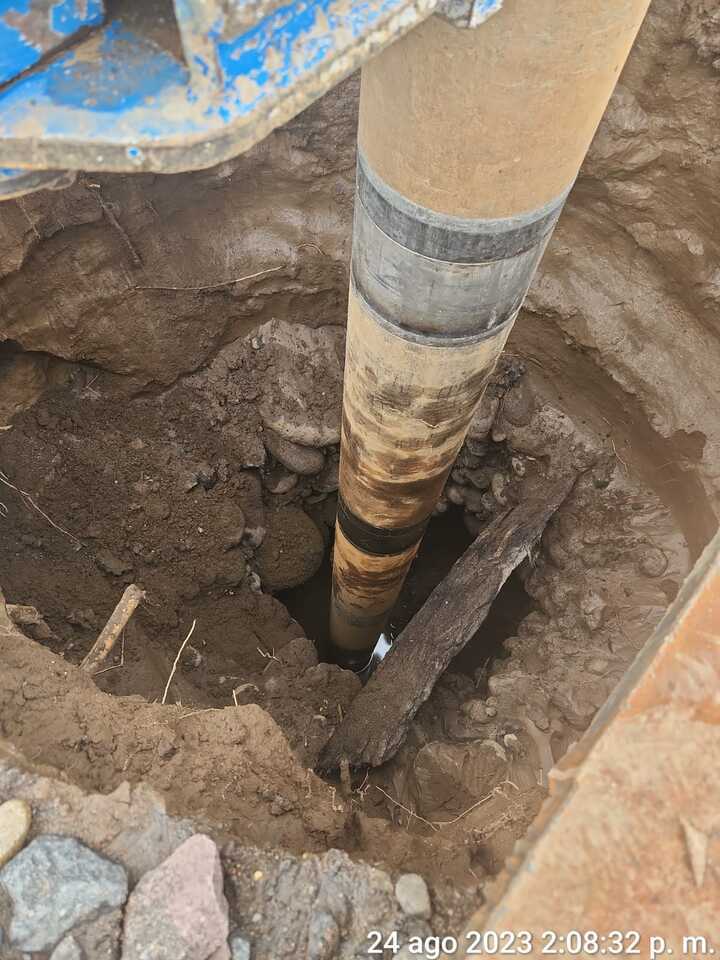
On the Salvadoran side, the execution proceeded relatively smoothly. The soil was more manageable, micropiles were shorter and multiple installations per rig per day were achievable from the outset.
In contrast, the Guatemalan side presented a much tougher scenario. The massive boulders and alternating sandy layers made drilling extremely slow and unpredictable.
Only two rigs, a Comacchio MC15 and a Casagrande M9, were capable of handling the conditions. The first micropile took over a week to complete, and with 234 remaining, the pressure mounted quickly.
Grouting posed another challenge. The volume of grout required was four to seven times the theoretical estimate, due to the porous and unstable nature of the alluvial deposits. This not only slowed progress but also raised concerns about material availability and cost.
Several improvement strategies were explored. Among these, reducing micropile length proved most promising.
A recalculation showed that shortening the micropiles by 2m would still meet geotechnical requirements (and a load test supported this calculation), while significantly improving installation speed.
However, the decision-making process and administrative approval for changes were slow, so the length of micropiles was not optimised.
Final stages
Eventually, the final stages of construction saw significant improvements in micropile installation rates, reaching up to two micropiles per rig per day on some occasions. These gains were made possible by a combination of factors:
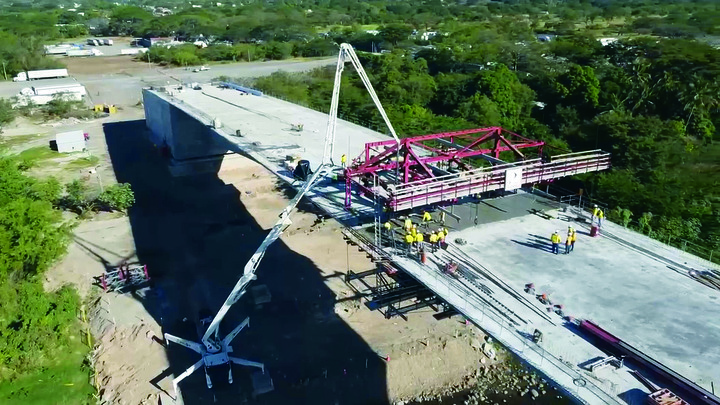
Importantly, the micropile execution did not delay the closure of the deck. Segmental construction progressed steadily, with the "zero segment" marking the start and segment 16 completing the span.
The General Manuel José Arce Bridge project stands as a remarkable example of engineering adaptation and regional collaboration.
The success of the bridge hinged on the ability to respond to unique local challenges including geotechnical conditions, logistics and limited equipment availability.
In the face of deep, boulder-filled alluvial deposits and high seismic risk, micropiles proved to be the only feasible foundation technique.
This project marks a significant step forward in the use and acceptance of micropiles in El Salvador and Guatemala. It sets a precedent for future infrastructure developments, showing that advanced engineering solutions can be successfully applied — even in resource-constrained environments — when backed by determination and collaboration.
The completed bridge is a symbol of regional progress. For El Salvador and Guatemala, it enhances trade, improves safety and strengthens connectivity.
And for those involved, it's a reminder to "keep on micropiling," not just as a technical method, but as a mindset for overcoming challenges.
The International Society for Micropiles awarded the foundation of the General Manuel José Arce Bridge joining El Salvador and Guatemala its 5th World Cup of Micropiles in 2025.
*Tomas Murillo is a geotechnical consultant and CEO at Ingeniería Geotécnica Aplicada (InGeAp)
The above is an edited version of an article originally published in the March/April 2026 issue of Deep Foundations. It is republished here with the kind permission of the Deep Foundations Institute (DFI). DFI is an international technical association of firms and individuals in geotechnical, geoenvironmental and related industries. www.dfi.org.













