

Mining and civil geo-professionals using AI-based technology are struggling to unlock value from increasingly complex, multisource datasets, according to a report published by Bentley Subsurface company Seequent.
Findings from a survey of more than 1,000 geo-professionals worldwide shows teams grappling with complex datasets across multiple software platforms, unmanaged historical data, and routine data administration.
According to Seequent's 7th Geoprofessionals Data Management Report, while many look to harness the information data management systems contain, framework limitations are resulting in too much time being spent managing the data, rather than interpreting the results.
YOU MIGHT ALSO LIKE
Seequent says the findings also raises issues with regards to data quality, with many organisations lacking a centralised "single source of truth".
"Data is the most valuable asset of any organisation, and it is clear from our report that both the civil sector and the mining sector are ready to unlock that value. The surge in AI shows a clear appetite for innovation. The opportunity now is to build the data foundations that will allow these technologies to thrive and deliver on their promise of a more efficient and sustainable future," says Angela Harvey, Seequent's Chief Customer Officer.
Frameworks lag
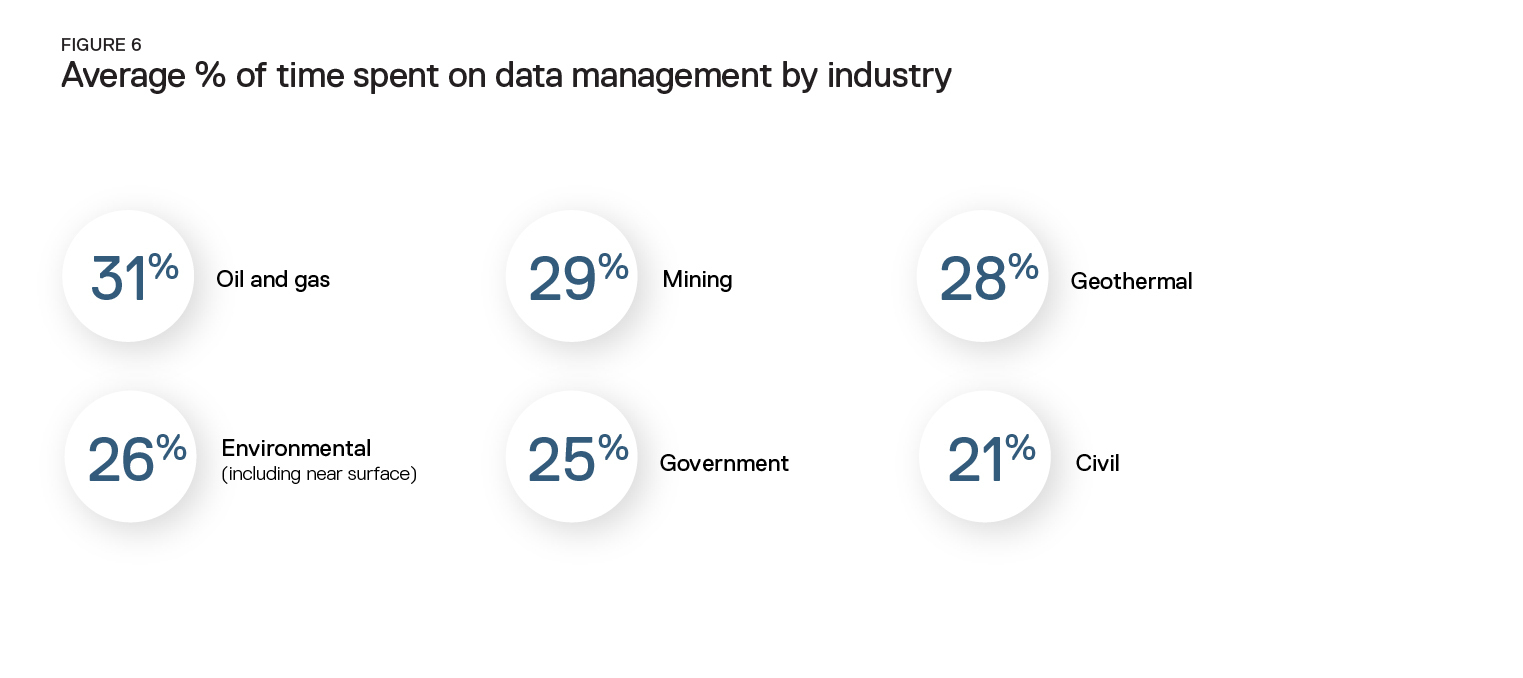
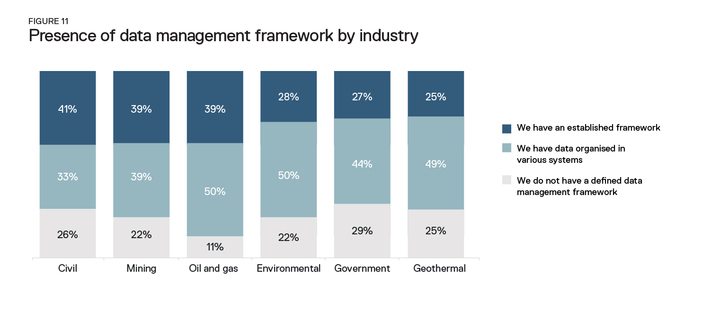
In mining, 80% of geo-professionals view data management as being of high or critical importance, but spend almost a third of their time on data management tasks. However foundational frameworks lag behind with only 39% of mining companies having implemented a defined data management framework.

"Data isn't just a byproduct of operations but the core asset that drives every decision, from exploration to reclamation," says Dr Janina Elliott, Segment Director, Mining, Seequent.
"The industry is laser-focused on data management, but it also highlights the major challenge of unlocking the full value from current and historical data for a future where AI and automation will be increasingly important."
According to the survey results, cnly 41% of civil geo-professionals have an established framework, with just 30% maintaining a formal data chain of custody.
Although the survey "shows a sector moving in the right direction, [it is ] not yet at the pace the work now demands.... Organisations that strengthen their data foundations now will be better positioned to adapt, innovate, and meet the evolving demands of the subsurface industries," says Seequent, in the report.