




As equipment and machinery become more advanced to handle increasingly complex and challenging projects, OEMs are making life easier for operators with a raft of after sales solutions designed to keep things running smoothly, for longer.
Condition- and performance-based monitoring solutions, embedded diagnostics, and various through life care packages are fast becoming standard across most machines, with maintenance no longer something carried out just when stuff breaks down but now a key factor in reducing overall project costs.
The latest rigs and trucks to roll out of the Epiroc factory, for instance, are now equipped with smart diagnostic systems and sensors capable of giving operators and technicians a much clearer view of their machine's status than earlier models.
"We're always looking to make life easier for the operators and people working with and around the machines," says Epiroc's Global Technical Service Engineer Daniel Lofvenhamn. "When it comes to our SmartROC segment, we have a lot of diagnostic systems. But no matter how advanced the machine is, basic daily maintenance is still required."
YOU MIGHT ALSO LIKE
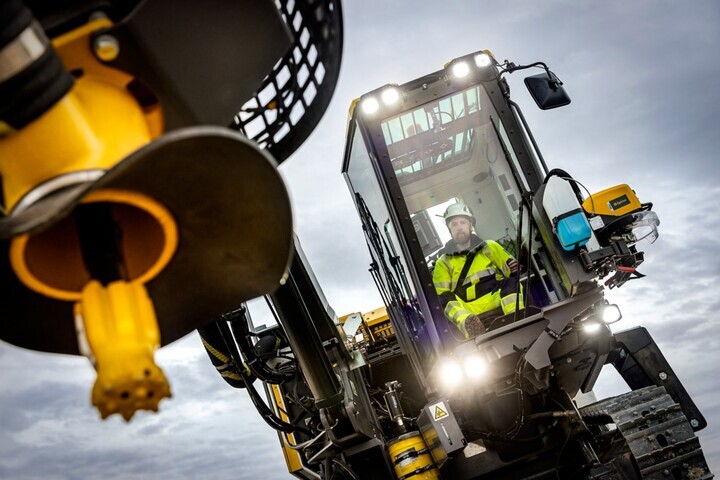
These daily, weekly and monthly checks include mechanical adjustments, especially to feed assemblies. And monitoring for excesses vibration is always important, especially on rotating machinery and rod handling systems, where shaft misalignment can cause significant damage and loss of production.
RigScan
To help Epiroc technicians quickly detect problems before they result in costly downtime, the company's RigScan takes a non-intrusive look at the equipment's condition and performance "so we can understand when component parts are close to wear down".
During a RigScan audit, the machine is divided into a number of zones where the Epiroc expert works through each area according to specific protocols. The size of the audit varies based on the size and type of the equipment, but initial scans check for internal leaks, pressure blockages, or over pressurisation of a valve or pump, for example.
Take a drill rig. Different parts of the drill emit different temperature ranges and specific heat signatures, and with a thermal imaging camera, RigScan can detect early signs of bearing failures or misalignment. Cooling and compressor problems associated with hydraulic failure can also be detected, allowing Epiroc to advise on whether a part needs to be replaced right away or if it can continue working a bit longer.
"Some of the challenges that Epiroc customers are facing lend themselves to a long-term maintenance plan where service is a natural part of day-to-day operations. If machines are run day in and day out, without planned servicing, mining and construction companies are risking breakdowns and production losses, which is much more costly," says the company
All the OEMs GDI spoke with indicated a trend for long term service agreements (LSA) as their customers look to improve predictability and uptime.
Volvo Construction Equipment for instance explained it has revised it offerings following market demand by consolidating its existing maintenance and repair programmes into a single service with Gold, Silver, or Blue options, depending on the level of repair and preventive maintenance required.
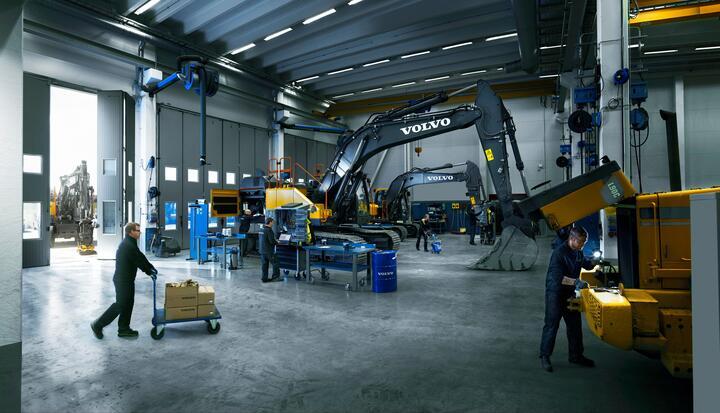
The company has also introduced a new monitoring solution, Volvo ActiveCare, to help customers maximise machine uptime. Through Volvo's Uptime Centre, machines in the field are monitored remotely via a CareTrack telematics system, which allows Volvo to track machine performance and identify error codes or alarms as they occur.
"When a serious issue is detected that could lead to a breakdown, the Uptime Centre creates a case and contacts the nearest dealer to the machine," the company tells GDI in an email.
"The dealer can then act quickly and advise the customer on the right next steps, helping to prevent unplanned downtime. Potential issues can be noticed, assessed, and escalated in a structured way."
Active care
Once a customer subscribes to Volvo Active Care, their connected machines are continuously monitored. Volvo's product support teams analyse relevant alarms and errors and coordinate with the closest dealer to support fast and effective action. The overall goal is to shift from reactive repairs to proactive planning, so service or repairs can be scheduled before a machine stops unexpectedly.
For customers, the key benefit is reduced unscheduled downtime, which is often one of the most expensive disruptions on a jobsite, says the company.
"Customers can receive reports that consolidate critical technical alarms and operating data such as operator behaviour alerts, fuel consumption, idling time, and alarm frequency. With these insights, fleet owners can set improvement targets, for example reducing idling across the fleet, to lower costs and increase efficiency."
Similarly, Liebherr in Nenzing sees an upswing in its customers taking out LSAs, particularly operators of its drilling rigs and lifting cranes.
Central to this is what Liebherr terms its CarePacks model, a range of flexible packages covering scheduled maintenance through to a fully comprehensive premium service "for absolute peace of mind".
The scope is defined by machine running hours – typically 5000 to 10,000 intervals – aligning maintenance planning with actual machine use rather than any generic timetable.
OEM-led support
This approach is underpinned by a deliberate strategy to remain close to its customers though Liebherr Nenzing's 50 sales and service subsidiaries worldwide. This reduces reliance on third-party dealers and service companies to ensure first-line OEM-led support.
The intention is to provide continuity across the entire service life of the machine, whether through formal agreements or more reactive, day-to-day support structures.
Digitalisation is also playing an increasingly central role in how this support is delivered. For instance, Liebherr's fleet management platform, LiDAT, provides maintenance managers with visibility of the machine's status across the fleet.
This is complemented with the company's engine diagnostic tool LiDIA, which allows customers to assess specific components via a dashboard interface. "By constantly monitoring and improving the components' current state, machine downtime can be reduced to a minimum," states the LiDIA marketing blurb.

These tools not only flag faults but also provide guidance on corrective action and link directly to parts supply, enabling faster intervention and reducing reliance on on-site OEM technicians, said Christoph Reinheimer, head of customer service (pictured), deep foundation machines. He adds that this support is reinforced with extensive training for operators and maintenance personnel, covering everything from routine servicing to assembly and disassembly procedures.
Alongside this, Liebherr says it maintains a long-term commitment to parts availability for at least 15 years after a machine has left the factory, with many older units still actively supported in the field.
"That's our minimum standard," says Reinheimer. "Usually, we still have machines in the field operating from 1990 and we can still deliver parts for them."
Parts app
Looking ahead, Liebherr believes predictive maintenance technologies will continue to evolve in line with customer demand. We want to give customers a better understanding of the condition of their machines. So, this is one of our major focus points at the moment."
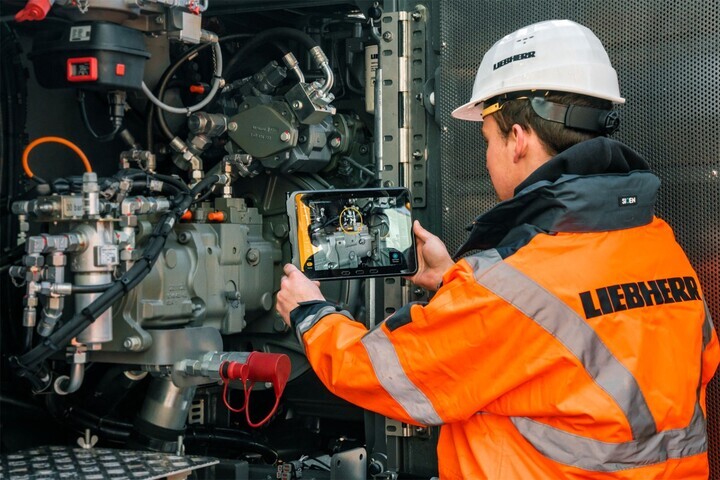
To this end the company released an app called Parts Assistant, which is designed to help customers identify the right spare parts by simply taking a picture of the component in the machine using their smart phones. Parts Assistant then gives the customer the right part number to make an order via Liebherr's online parts shop.
Specifically developed for crawler cranes up to 400t, duty cycle crawler cranes and foundation equipment, operators can identify, select and order parts seamlessly, all in one go.
"Ordering and managing Liebherr parts has never been easier, " says the company.













